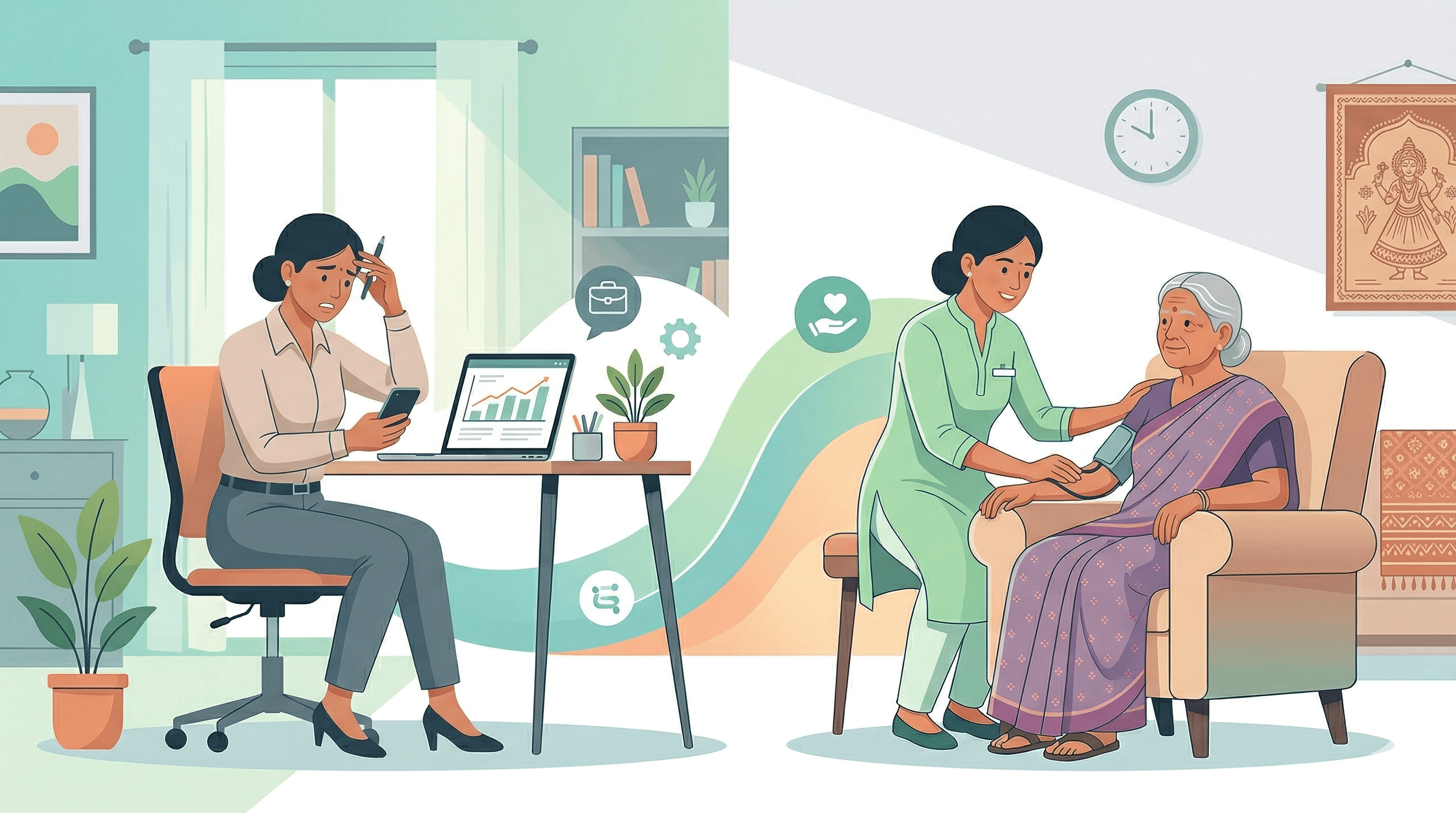
Priya, a senior marketing manager, gets a call at 2 PM. Her father has fallen at home. She rushes out, misses a client presentation, and spends the next week scrambling between hospital visits and work deadlines, wondering if her parents are safe. Her performance suffers. She's not alone.
In India, 79% of employees identify as caregivers, a rate far higher than the global average. Yet, most corporate health benefits ignore the reality that up to 70% of healthcare needs can be met at home. This growing gap between what employees need and what employers provide is a silent crisis. As we on, progressive companies are realising that supporting their team's home healthcare needs isn't just a perk, it's a strategic necessity.
Beyond the clinic: understanding the scope of modern nursing services
Modern nursing services include professional medical care delivered by trained, certified nurses and healthcare attendants in various settings. These services blend clinical expertise with compassionate patient support, ranging from skilled medical procedures like wound care to daily living assistance and specialised care for conditions like dementia or post-operative recovery. The term has evolved far beyond the hospital ward, representing a full ecosystem of care that meets patients where they are.
What exactly are nursing services?
Professional nursing services are a blend of clinical competence and human connection, delivered by registered nurses (RNs), licensed practical nurses (LPNs), and trained healthcare attendants. They provide medical care that requires specialised knowledge, from administering injections and managing chronic conditions to monitoring vital signs and coordinating with doctors. This expertise is crucial for preventing complications, reducing hospital readmissions, and improving overall health outcomes.
For example, if your parent has diabetes, a home attendant can remind them to take medication. A skilled nurse, however, can assess blood sugar trends, recognise early signs of complications like those requiring specialised diabetic foot care, and educate the family on preventing emergencies.
Diverse types of nursing care for every need
The breadth of nursing services available today reflects the complexity of modern healthcare needs. Understanding the different types helps families and employers choose the right level of support.
Skilled nursing care: This involves clinical tasks that require a licensed professional. Examples include wound care, IV therapy, medication administration, post-operative monitoring, chronic disease management (diabetes, COPD), and catheter or feeding tube care.
Attendant care: This focuses on assistance with activities of daily living (ADLs). It includes help with bathing, dressing, mobility support, fall prevention, meal preparation, medication reminders, and crucial companionship to combat loneliness.
Specialised care: This is tailored to specific conditions. Dementia care at home requires professionals trained in behavioural management, while geriatric care addresses the complex needs of elderly patients. Other examples include palliative care for serious illnesses and Japa care for post-natal support.
The distinction between skilled nurses and attendants is vital. Both are valuable, but choosing the right one ensures patient safety and cost-effectiveness.
The silent crisis: why elder care is a growing concern for Indian families
India's demographic shift is creating an unprecedented caregiving burden on working professionals. A rapidly aging population, the breakdown of traditional joint family structures, and urbanisation are fueling a crisis. By 2050, citizens over 60 will make up nearly 21% of India's population, yet the support systems to care for them are lagging. This isn't just a family issue; it's a workforce challenge that companies can no longer ignore.
India's aging population and the caregiving crunch
The numbers are clear. India's home healthcare market is projected to reach USD 27.38 billion by 2030, growing at over 18% annually. This explosive growth signals a massive, unmet need. In a culture where old-age homes remain a difficult choice for many families, home-based care is not just a preference but a necessity. This explains why elderly care at home is so important in the Indian context.
Nuclear families and urbanisation have fractured the traditional safety net. The daughter-in-law who once provided elder care is now a working professional. The son who moved for his career can't easily care for parents in another city. The result is a generation of employees stretched thin, trying to be in two places at once. Many wait until a crisis before they recognize their elderly parent needs a professional caregiver, adding to the stress.
The hidden costs of informal caregiving
The costs of informal caregiving are staggering. Lost productivity, chronic absenteeism, stress-related health issues, and financial strain create a cascade of problems for both employees and employers. An employee takes "sick days" for a parent's appointment, arrives late, leaves early, and spends work hours on the phone coordinating care. Their mind is split, and their work suffers.
Eventually, many talented professionals, often women in their peak earning years, leave the workforce entirely. This represents a massive loss of institutional knowledge, talent, and diversity for companies. The mental health toll is just as severe. Caregiver burnout leads to depression, anxiety, and physical illness, turning productive employees into patients themselves. Supporting caregivers isn't just compassionate; it's financially sound. Research shows that for every dollar spent on wellness programs, medical and absenteeism costs can fall by several dollars.
A win-win: how home healthcare benefits employees and employers
Offering home healthcare as a benefit directly addresses a major source of employee anxiety, leading to improved focus, morale, and productivity. This investment in employee well-being creates measurable business outcomes, including higher retention, better recruitment, and an enhanced employer brand. A supported employee is a productive employee, turning a personal challenge into a strategic business opportunity.
Empowering employees: peace of mind and productivity
When employees know their loved ones are receiving professional care, the constant background anxiety fades. They can focus in meetings, travel for work without guilt, and rest at night without waiting for an emergency call. Access to a reliable home care attendant or nurse provides more than just practical help; it offers profound psychological relief.
Employees feel less torn between their responsibilities, more present at work, and more loyal to an employer who acknowledges their life outside the office. When a company provides support, it becomes easier for employees to identify the signs their parents need a home caregiver and act on it without fear of penalty. The productivity gains are real, with fewer unplanned absences and higher engagement scores.
The employer's advantage: retention, recruitment, and reputation
The business case for offering home healthcare benefits is strong. Replacing a mid-level employee can cost up to 150% of their annual salary. If these benefits prevent even a few valued employees from leaving, they pay for themselves. In a competitive talent market, a comprehensive benefits package that includes elder care support makes a company stand out, especially to experienced mid-career professionals.
Benefits for Employees | Benefits for Employers |
|---|---|
Reduced stress and anxiety | Higher retention rates |
Improved work-life balance | Lower recruitment costs |
Access to professional care | Increased productivity |
Peace of mind about family | Enhanced employer brand |
Better focus at work | Reduced absenteeism |
Support during crises | Stronger employee loyalty |
A reputation for supporting employees through life's challenges builds a powerful employer brand that attracts talent, customers, and investors. Elder care support is quickly becoming a modern necessity, much like health insurance. Early adopters will gain a significant competitive advantage.
Beyond the traditional: types of home healthcare benefits
Companies can integrate home healthcare into their benefits packages in several flexible ways.
Subsidized home care services: Companies can partner with providers to offer employees discounted rates on nursing services, attendant care, or physiotherapy, covering a percentage of the cost.
Care coordination services: Some benefits connect employees with experts who handle the logistics of finding, vetting, and managing care, saving employees time and stress.
Flexible spending accounts (FSAs): These allow employees to use pre-tax income for qualified elder care expenses, providing a tax advantage and flexibility.
Access to medical equipment: Partnering with providers for affordable medical equipment rentals reduces the financial burden of items like hospital beds, oxygen concentrators, and wheelchairs.
Leading companies in India like HSBC, Accenture, and SAP are already offering benefits like elder care leave and wellness support, signaling a clear trend in corporate responsibility.
Choosing the right partner: ensuring quality and trust in home care
Selecting a home healthcare provider requires a careful evaluation of their verification processes, service range, operational guarantees, and reputation. The quality of your partner directly impacts employee satisfaction and the health outcomes of their loved ones. This is a decision where trust and reliability are paramount, and it's crucial to look beyond just the price tag.
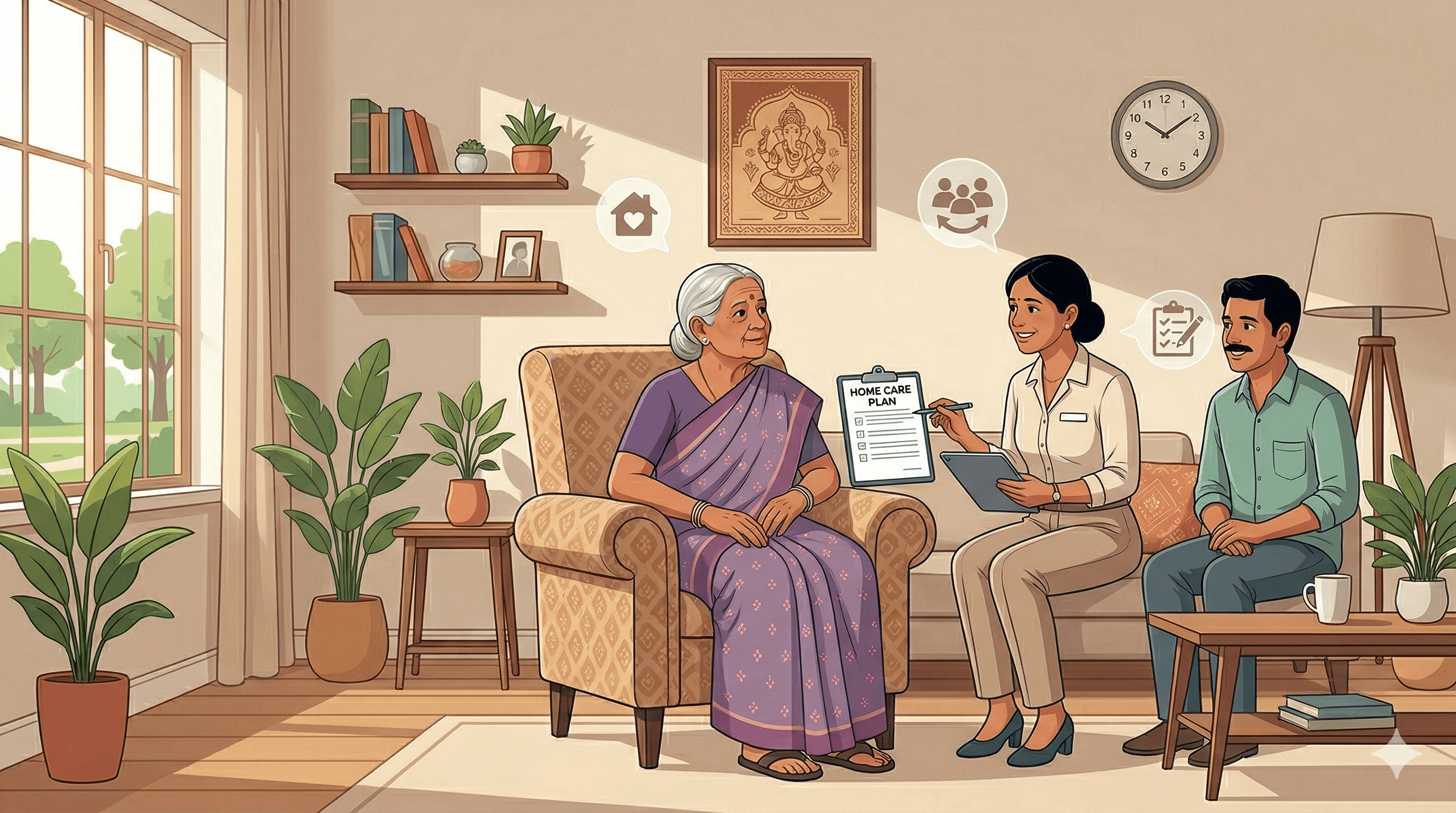
What to look for in a home healthcare provider
Use this checklist to vet potential home care partners:
Verification and training: Does the provider conduct rigorous background checks? Are their nurses certified and licensed? Do they offer ongoing training? A provider should be able to clearly articulate their multi-step vetting process.
Service breadth: A good partner offers a comprehensive range of services, from skilled nursing to attendant care and specialized support like physiotherapy. This ensures they can meet diverse employee needs.
Operational guarantees: Look for providers that offer fast placement (within hours, not days), a clear replacement policy if a caregiver isn't a good fit, and 24/7 support for emergencies. These guarantees separate professional agencies from informal arrangements.
Reputation and track record: Check for positive online reviews, family testimonials, and industry certifications. A long history of service with a high satisfaction rate is a strong indicator of quality.
Understanding the pros and cons of a home care agency vs. an independent caregiver is a key part of the decision, and a good corporate partner simplifies this choice.
The Heka Health difference: care that feels like family
Heka Health is built on the principle that care should be both clinically excellent and deeply compassionate. Our approach centers on providing verified, skilled caregivers who are chosen for their capability and kindness, because we believe technical skill without empathy is not true care.
Our operational guarantees are designed to eliminate stress. With a 4-hour hiring process, families get help quickly in a crisis. Our replacement guarantee ensures the right fit, so employees never feel stuck in an uncomfortable situation. With a network of over 350 qualified professionals, we can match the right caregiver to any need, from post-operative nursing to specialised Japa care. This commitment to heartfelt trust and expert hands is what sets us apart.
Building a supportive future: next steps for progressive companies
Integrating home healthcare into your benefits strategy is a forward-thinking move that addresses a critical need in your workforce. It requires assessing employee needs, researching reputable providers, and measuring the impact on key business metrics. This strategic investment in your people positions you as an employer of choice and builds a more resilient, focused, and loyal team.
Integrating home healthcare into your benefits strategy
Start with a needs assessment. An anonymous survey can reveal how many of your employees are juggling caregiving responsibilities. The results will likely highlight a significant, unaddressed challenge within your workforce. Next, research and request proposals from established home healthcare providers. Look for partners with proven track records and the capacity to serve your employee base.
Consider a phased rollout, starting with a pilot program for employees who self-identify as caregivers. This allows you to gather feedback, measure utilisation, and refine the offering before a company-wide launch. Framing home healthcare as a strategic advantage over institutional care is key; it's often a better and more cost-effective choice than prolonged professional home healthcare vs. hospital stays.
A call to action for a healthier workforce
The question is no longer if you should offer elder care benefits, but how soon you can implement them. By acknowledging and supporting the caregiving responsibilities of your employees, you foster a culture of trust and loyalty that translates directly into business success. You empower your team to bring their whole, focused selves to work, knowing their loved ones are in safe hands.
Take the first step toward building a more supportive and productive workforce. Explore how a partnership with a trusted home healthcare provider like Heka Health can be tailored to your company's unique needs and create a win-win for your employees and your bottom line.
Frequently asked questions about home healthcare benefits
Here are answers to common questions about incorporating home healthcare into employee benefits.
What types of home healthcare services can be included in employee benefits?
Employee benefits can include a wide range of services, such as skilled nursing for medical needs, attendant care for daily living assistance, physiotherapy for rehabilitation, and specialized support like dementia care, post-operative recovery, or Japa care for new mothers.
How does offering home healthcare benefits impact employee retention?
These benefits significantly reduce employee stress and improve work-life balance. By providing peace of mind and practical support for caregiving duties, companies foster deep loyalty and gratitude, making employees far less likely to seek employment elsewhere.
Is home healthcare only for the elderly?
No. While elder care is a primary driver, home healthcare is for anyone needing medical support or assistance at home. This includes individuals recovering from surgery, new mothers, people with chronic illnesses, or anyone who can heal and manage their condition more comfortably at home.
How can a company ensure the quality of home healthcare providers?
Companies should partner with providers that have a rigorous vetting process, including background checks and credential verification. Look for agencies with strong operational guarantees like fast hiring, a replacement policy, 24/7 support, and a proven track record of positive reviews. A hiring checklist for a private nurse can also be a useful tool for employees.
What is the first step for a company interested in offering these benefits?
The first step is to conduct an internal needs assessment, often through an anonymous survey, to understand the scale of caregiving responsibilities within your workforce. After that, research reputable home healthcare providers and start a conversation about creating a pilot program or a customized benefits package.
Your well-being
is our priority.
Together, let's navigate every step
with care and compassion.

Your well-being
is our priority.
Together, let's navigate every step
with care and compassion.
Your well-being
is our priority.
Together, let's navigate every step
with care and compassion.