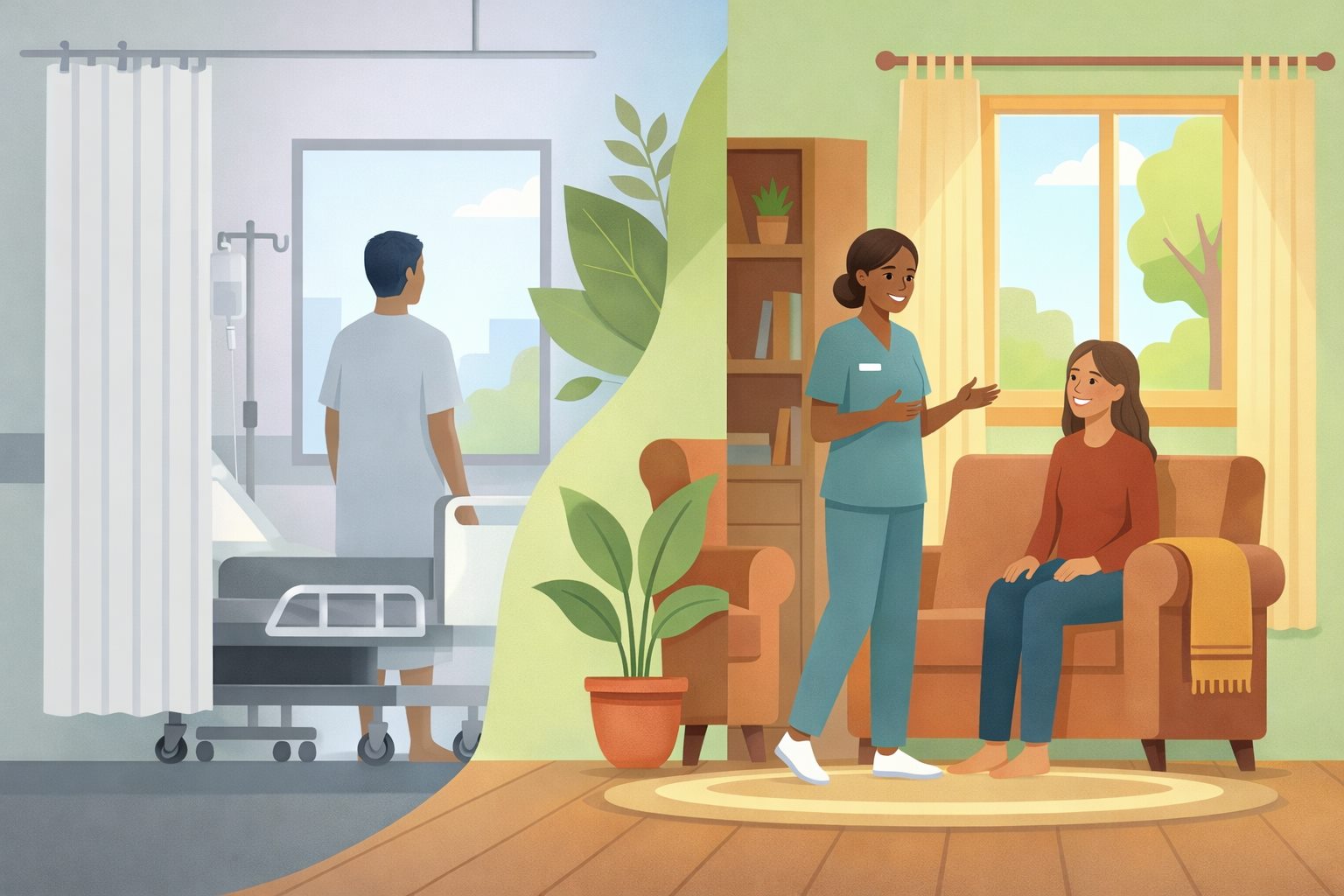
Hospital stays are exhausting. Between beeping machines, unfamiliar routines, and the constant flow of medical staff, recovery can feel more stressful than healing. For many patients, recovery works better at home, with professional care brought to them.
Professional home healthcare offers something hospitals simply cannot: the comfort of familiar surroundings combined with expert medical attention. Let's explore why more families are choosing home over hospital for recovery and long-term care.
Why does home feel like the right place for healing?
There's something irreplaceable about recovering in your own space. The smell of familiar cooking from the kitchen, the sound of family going about their day, the comfort of your own bed, these aren't luxuries during recovery; they're necessities that hospitals cannot provide.
When patients stay in hospitals for extended periods, they lose their daily rhythm. Meals arrive on fixed schedules, sleep gets interrupted for medication rounds, and the lack of privacy becomes wearing. At home, recovery happens on the patient's terms. They eat when hungry, rest when tired, and maintain the dignity of their own routine.
Family presence makes an enormous difference, too. In hospitals, visiting hours restrict when loved ones can be present. At home, there are no such barriers. This psychological comfort accelerates physical healing in ways medication alone cannot achieve.
What makes recovery faster at home than in a hospital?
Sleep quality improves dramatically when patients return home. Without overhead announcements, neighbouring patients, or nighttime vital checks, they get the deep, uninterrupted rest that bodies need to heal. Better sleep means faster tissue repair, improved immune function, and enhanced mental clarity.
Physical therapy and rehabilitation also progress more quickly at home. Instead of practising movements in a generic hospital setting, patients work in the spaces where they'll actually use these skills, climbing their own stairs, navigating their own bathroom, and moving around their own kitchen. This real-world practice translates to functional recovery faster than hospital-based exercises.
Moreover, the risk of hospital-acquired infections disappears entirely. In hospital settings, patients are exposed to bacteria, viruses, and other pathogens that circulate in wards. At home, this risk virtually vanishes. Your loved one isn't sharing equipment, breathing recirculated air, or coming into contact with other ill patients.
How does home healthcare actually work for serious conditions?
Many families worry that complex medical needs require hospital infrastructure. The reality is quite different. Modern professional home healthcare brings hospital-level expertise right to your doorstep.
Trained nurses can manage IV medications, monitor post-surgical wounds, handle catheter care, and track vital signs just as effectively at home as in a hospital. They carry essential medical equipment, maintain direct communication with physicians, and follow the same protocols that would apply in an institutional setting.
For patients with chronic conditions like diabetes, heart disease, or respiratory illnesses, home-based monitoring often proves superior. Caregivers notice subtle changes in the patient's condition, dietary patterns, and daily functioning that might go unnoticed during brief hospital rounds. This continuous, personalised attention catches problems early before they escalate into emergencies.
Technology enhances safety further. Many home healthcare providers now use remote monitoring devices that track heart rate, blood oxygen levels, blood pressure, and other critical metrics in real-time. Any concerning reading triggers an immediate caregiver response, providing round-the-clock surveillance without the institutional environment.
Is home healthcare actually more affordable than extended hospitalisation?
In Delhi NCR's private hospitals, costs accumulate rapidly during extended stays. According to recent healthcare cost analyses, even a single day's ICU stay can exceed ₹35,000, with regular ward costs ranging from ₹5,000 to ₹15,000 per day. These charges don't include medications, diagnostic tests, specialist consultations, or the countless consumables that appear on final bills.
Professional home healthcare services operate differently. Families pay only for the actual care needed, whether that's nursing support for a few hours daily or round-the-clock assistance. There are no room charges, no facility fees, and no hidden costs for basic amenities. The transparency alone provides peace of mind that hospital bills rarely offer.
Transportation costs, parking fees, and the expenses of family members staying near hospitals for extended periods also disappear with home care. When you calculate the complete financial picture, professional home healthcare often proves significantly more economical while providing superior comfort and personalised attention.
Can personalised care plans really make that much difference?
Hospitals treat conditions; home healthcare treats people. That difference directly affects recovery and quality of life.
Hospital care follows fixed routines. Meals, medication, and therapy are scheduled around staff availability, not how the patient feels or functions best.
Personalised home care adapts to the individual. Care plans reflect personal needs, preferences, culture, and family dynamics.
Food feels familiar and nourishing. Home care supports regional cuisines, religious diets, and comfort foods, helping patients eat better and heal faster.
Daily routines stay intact. Prayers, rest times, walks, and personal habits continue, reducing stress and improving mental well-being.
Independence and dignity are preserved. Especially for elderly patients, staying involved in daily decisions strengthens confidence and the will to recover.
Does home care reduce the burden on family caregivers?
Caring for an ill loved one is emotionally demanding and physically exhausting. Family members often find themselves stretched impossibly thin, trying to manage their jobs, children, household responsibilities, and caregiving duties simultaneously.
This is especially true when it comes to elderly care at home. Ageing parents often need ongoing medical attention, help with daily activities, and emotional reassurance. Families want to be there, but without medical training or structured support, the responsibility can quickly become overwhelming. Stress, fatigue, and guilt often follow, even when intentions are good.
According to research on elderly care in India, many patients end up without adequate support, not because families don't care, but because relatives lack medical training and simply cannot provide the level of care needed while managing everything else in their lives. The guilt and stress that result can strain family relationships at the very moment when emotional connection matters most.
Professional home healthcare changes this equation entirely. Trained caregivers handle the medical aspects, daily care routines, medication management, and physical support. Family members can then focus on what they do best, providing love, companionship, and emotional support without being overwhelmed by the technical demands of care.
This shared responsibility model ensures patients receive consistent, expert care while families maintain their emotional bonds without sacrificing their own well-being or professional commitments. It's an approach that strengthens relationships rather than straining them, creating space for quality time together instead of exhausting caregiving duties.
What should you look for in a home healthcare provider?
Not all home healthcare services deliver the same quality or reliability. When selecting a provider for your family, certain qualities indicate professional, trustworthy care:
Verified caregivers with proper medical training and background checks.
24/7 availability for emergencies and consultations.
Clear communication with families about care plans, progress, and any concerns.
Flexibility to adjust services as the patient's needs change.
Direct coordination with your family's existing doctors and specialists.
Transparent pricing with no hidden charges or surprise bills.
Regular quality monitoring and caregiver supervision.
Replacement guarantees if the initial caregiver match isn't quite right.
Professional home healthcare should feel like a partnership with your family, not a distant service. The right provider takes time to understand your loved one's personality, medical needs, cultural preferences, and family dynamics, then builds a care plan around these individual factors.
Home is where healing truly happens
Professional home healthcare delivers better outcomes, faster recovery, greater affordability, and higher patient satisfaction than extended hospital stays. More importantly, it preserves dignity, maintains family bonds, and supports healing in the environment where patients feel most comfortable and secure.
This is where home healthcare services like Heka Health come in. Heka Health provides doctor-led, personalised medical care at home, from skilled nursing and physiotherapy to post-hospital recovery and elder care. Every care plan is built around the patient’s medical needs, daily routine, and family context, so recovery fits naturally into life rather than disrupting it.
Recovery shouldn’t mean giving up privacy, routine, or familiar surroundings. With expert medical care delivered at home, families no longer have to choose between quality treatment and quality of life.
If you’d like to understand how we can support your family’s care needs, contact our team to discuss a plan tailored to you.
Your well-being
is our priority.
Together, let's navigate every step
with care and compassion.

Your well-being
is our priority.
Together, let's navigate every step
with care and compassion.
Your well-being
is our priority.
Together, let's navigate every step
with care and compassion.