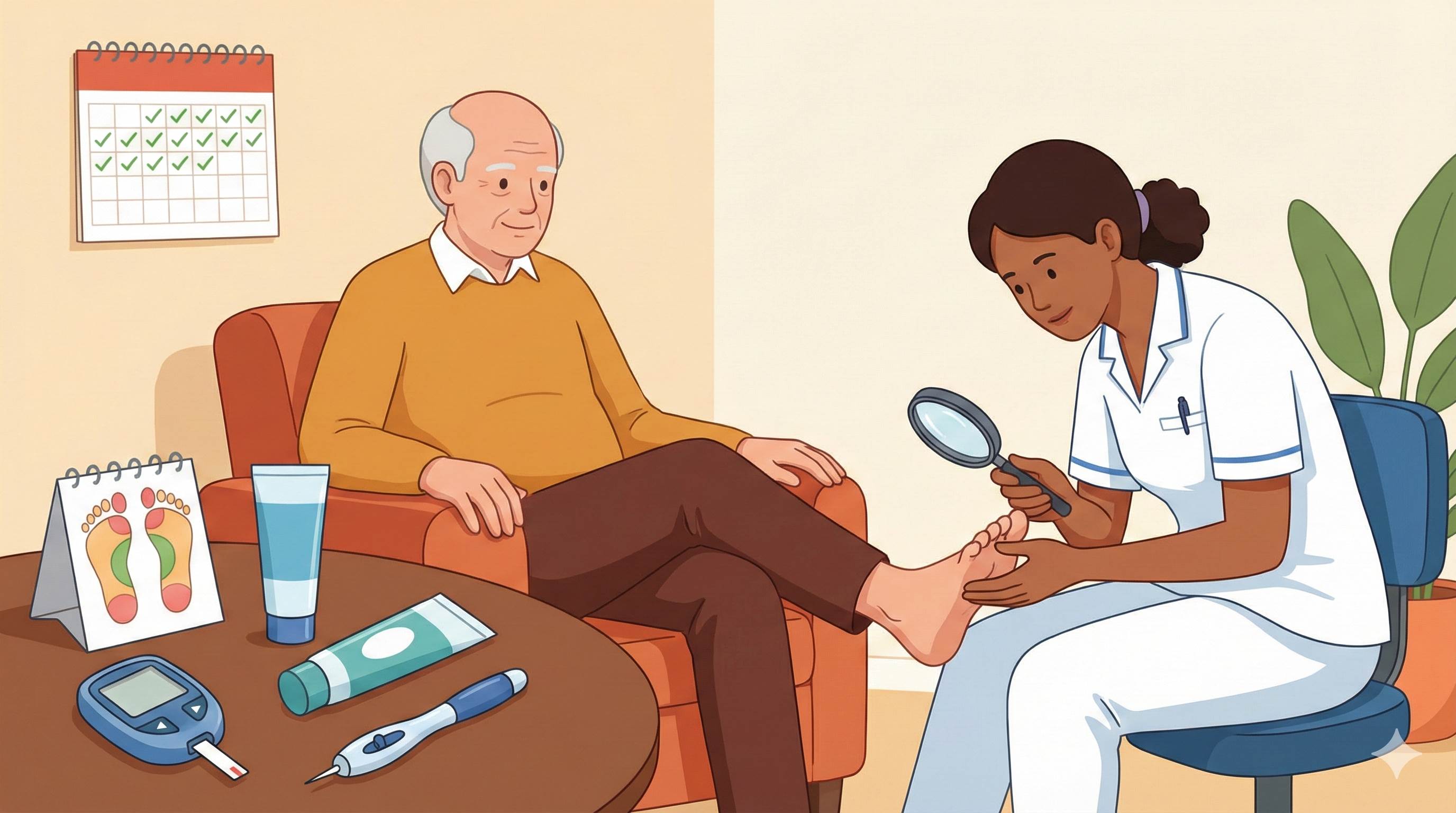
A small cut on the toe. A minor blister from new shoes. A cracked heel that seems insignificant. For most people, these are fleeting annoyances that heal within days. For someone with diabetes, they can mark the beginning of a medical crisis that leads to hospitalisation, amputation, or worse.
The statistics paint a sobering picture. Research shows that approximately 1,00,000 lower limbs are amputated in India every year, with at least 75% involving diabetic patients with neuropathic feet and secondary infections. Even more concerning, diabetic foot ulcers contribute to approximately 80% of all non-traumatic amputations in the country annually. These numbers reflect real people whose lives have been permanently changed by complications that proper foot care might have prevented.
Why are diabetic feet so vulnerable to complications?
Diabetes affects the body in ways that turn minor foot problems into major medical emergencies. Understanding these mechanisms helps explain why diabetic foot care at home requires such vigilance.
High blood sugar levels damage nerves and blood vessels:
Peripheral neuropathy: Damaged nerves mean reduced sensation in the feet. Patients cannot feel cuts, blisters, or pressure sores developing, allowing injuries to worsen unnoticed.
Poor circulation: Compromised blood vessels reduce blood flow to the feet, slowing healing dramatically. Wounds that would heal in days for others take weeks or months for diabetic patients.
Weakened immune response: Elevated blood sugar impairs white blood cell function, making infections harder to fight and more likely to spread.
Dry skin: Diabetes affects skin moisture, leading to cracks and fissures that create entry points for bacteria.
This combination creates a perfect storm where small injuries go unnoticed, heal slowly, and become infected easily. By the time symptoms become obvious, significant damage has already occurred.
What are the warning signs that demand immediate attention?
Recognising problems early dramatically improves outcomes. Professional nurse care at home provides trained eyes that catch these warning signs before they escalate.
Critical symptoms requiring urgent evaluation:
Any cut, blister, or wound that doesn't begin healing within 48 hours.
Redness, warmth, or swelling around any foot injury.
Drainage, pus, or foul odour from wounds.
Skin colour changes, particularly dark or black discolouration.
Increased pain, or conversely, complete numbness in areas that previously had sensation.
Fever accompanying any foot problem.
Wounds that appear deeper than surface level or expose underlying tissue.
The challenge lies in the fact that neuropathy often prevents patients from feeling pain that would normally signal problems. Regular visual inspection becomes crucial, yet many patients cannot see their own feet properly due to mobility limitations or vision problems from diabetic retinopathy.
How does professional nursing support prevent diabetic foot complications?
Daily diabetic foot care at home with professional nursing services transforms prevention from a theoretical goal into a practical reality. Trained nurses bring expertise that makes a measurable difference in outcomes.
What nursing services for diabetic patients provide:
Daily foot inspections: Systematic examination of all foot surfaces, between toes, and pressure points where problems commonly develop.
Proper wound care: Professional cleaning, debridement of dead tissue, application of appropriate dressings, and monitoring for signs of infection.
Moisture management: Application of diabetic-appropriate moisturisers to prevent cracking whilst avoiding areas between toes where moisture promotes fungal growth.
Nail care: Safe trimming techniques that prevent ingrown toenails and cuts that could become infected.
Pressure point monitoring: Identifying calluses and areas of excessive pressure that could break down into ulcers.
Education: Teaching patients and families proper self-care techniques and warning signs that require immediate medical attention.
Coordination with physicians: Regular communication ensuring wound progression is monitored and treatment adjusted as needed.
As discussed in our guide on home nursing care for chronic illness, consistent professional oversight prevents the treatment gaps that lead to complications.
What makes diabetic wound dressing at home different from regular wound care?
Diabetic wounds require specialised care that differs significantly from treating similar injuries in non-diabetic patients. The techniques and materials used can determine whether wounds heal or deteriorate.
Specialised approaches for diabetic foot wounds:
Aspect | Standard wound care | Diabetic wound care |
Cleaning | Basic soap and water | Sterile saline solutions, gentle antiseptics, and avoiding tissue-damaging agents |
Debridement | Often unnecessary | Regular removal of dead tissue to promote healing |
Dressing selection | Simple adhesive bandages | Advanced moisture-retentive dressings, antimicrobial materials, and off-loading pressure |
Frequency | Change when soiled | Daily changes with thorough inspection at each dressing |
Monitoring | Casual observation | Systematic measurement, photography, and infection surveillance |
Duration | Days to weeks | Weeks to months with slow, monitored progression |
Professional nurses understand these differences and apply evidence-based practices that give diabetic wounds the best chance of healing.
Why do so many diabetic foot problems go untreated initially?
Despite the serious risks, diabetic foot complications often develop silently until they reach advanced stages. Understanding these barriers helps explain why professional support at home becomes so valuable.
Common reasons for delayed treatment:
Lack of sensation: Neuropathy prevents patients from feeling injuries developing, so they don't know problems exist until visible damage appears.
Limited mobility: Many diabetic patients struggle to examine their own feet due to obesity, joint problems, or general frailty.
Vision impairment: Diabetic retinopathy makes it difficult to see foot problems even when patients try to inspect them.
Minimisation: Small problems seem unimportant until they've progressed significantly.
Healthcare access: Travelling to clinics for frequent check-ups proves difficult for elderly or mobility-limited patients.
Knowledge gaps: Many patients don't understand the serious consequences of seemingly minor foot injuries.
Professional nursing support at home removes these barriers by bringing expert assessment directly to patients' homes, providing the consistent monitoring that prevents problems from advancing unnoticed.
What does proper daily diabetic foot care involve?
Comprehensive foot care requires more than occasional attention. A systematic daily routine makes prevention sustainable and effective.
Essential daily foot care practices:
Morning inspection: Check all foot surfaces, between toes, and heels for cuts, blisters, redness, or swelling before putting on shoes.
Proper washing: Clean feet daily with lukewarm water and mild soap, drying thoroughly, especially between toes.
Moisturiser application: Apply diabetic foot cream to prevent dry, cracked skin whilst avoiding areas between toes.
Nail care: Trim toenails straight across, file sharp edges, never cut cuticles or attempt "bathroom surgery" on corns or calluses.
Appropriate footwear: Wear properly fitting diabetic shoes with seamless interiors, and check inside shoes for foreign objects before wearing.
Temperature testing: Always test bath water temperature with an elbow before immersing feet to prevent burns from hot water.
Pressure relief: Avoid crossing legs, change positions regularly, and elevate feet when sitting to promote circulation.
When patients cannot perform these tasks safely themselves, professional nursing services ensure they're completed correctly every day without exception.
Is home nursing care cost-effective compared to treating complications?
The financial argument for preventive diabetic foot care at home proves compelling when compared to treating complications.
Cost comparison:
Daily home nursing visits: ₹800-1,200 per visit, approximately ₹24,000-36,000 monthly for daily care.
Hospitalisation for foot infection: ₹1,50,000-3,00,000 for a typical 10-15 day admission, including IV antibiotics, surgical debridement, and monitoring.
Amputation procedure and rehabilitation: ₹3,00,000-8,00,000, including surgery, hospital stay, prosthetics, and rehabilitation services.
Ongoing complications from amputation: Lifetime costs including mobility aids, home modifications, caregiver support, and increased mortality risk.
Beyond direct medical costs, complications result in lost work productivity, reduced quality of life, and emotional toll on patients and families. Preventive nursing care represents a wise investment that preserves health whilst avoiding catastrophic expenses.
When should you consider professional diabetic foot care?
Not every diabetic patient requires daily nursing support, but certain situations make professional care essential rather than optional.
High-risk patients who need regular nursing assessment:
Anyone with a current foot wound, ulcer, or infection.
Patients with a complete loss of sensation (inability to feel a 10g monofilament test).
Those with a previous amputation on either foot.
Diabetics with significant vision problems preventing self-examination.
Patients with limited mobility make foot care physically impossible.
Individuals living alone without family support for daily checks.
Those with a history of recurrent foot problems or poor healing.
Patients with additional complications, such as kidney disease or poor circulation.
Even diabetics without current problems benefit from weekly or monthly professional assessments that catch developing issues early and educate about proper prevention techniques.
Protecting diabetic feet with home nursing support
The gap between understanding diabetic foot risks intellectually and implementing consistent prevention practically remains wide for many patients. Professional nursing support bridges this gap, transforming abstract knowledge into concrete daily action that prevents life-altering complications.
Your feet literally support your independence, mobility, and quality of life. Diabetes threatens all three through complications that progress silently until damage becomes irreversible. Don't wait for warning signs to seek help; by then, prevention has failed, and you're managing a crisis rather than maintaining health.
If you or a loved one has diabetes, especially with any of the high-risk factors discussed, consider making professional diabetic foot care at home part of your health management strategy.
Contact Heka Health to discuss nursing services that provide the consistent, expert care your feet deserve.
Prevention today prevents amputation tomorrow.
Your well-being
is our priority.
Together, let's navigate every step
with care and compassion.

Your well-being
is our priority.
Together, let's navigate every step
with care and compassion.
Your well-being
is our priority.
Together, let's navigate every step
with care and compassion.