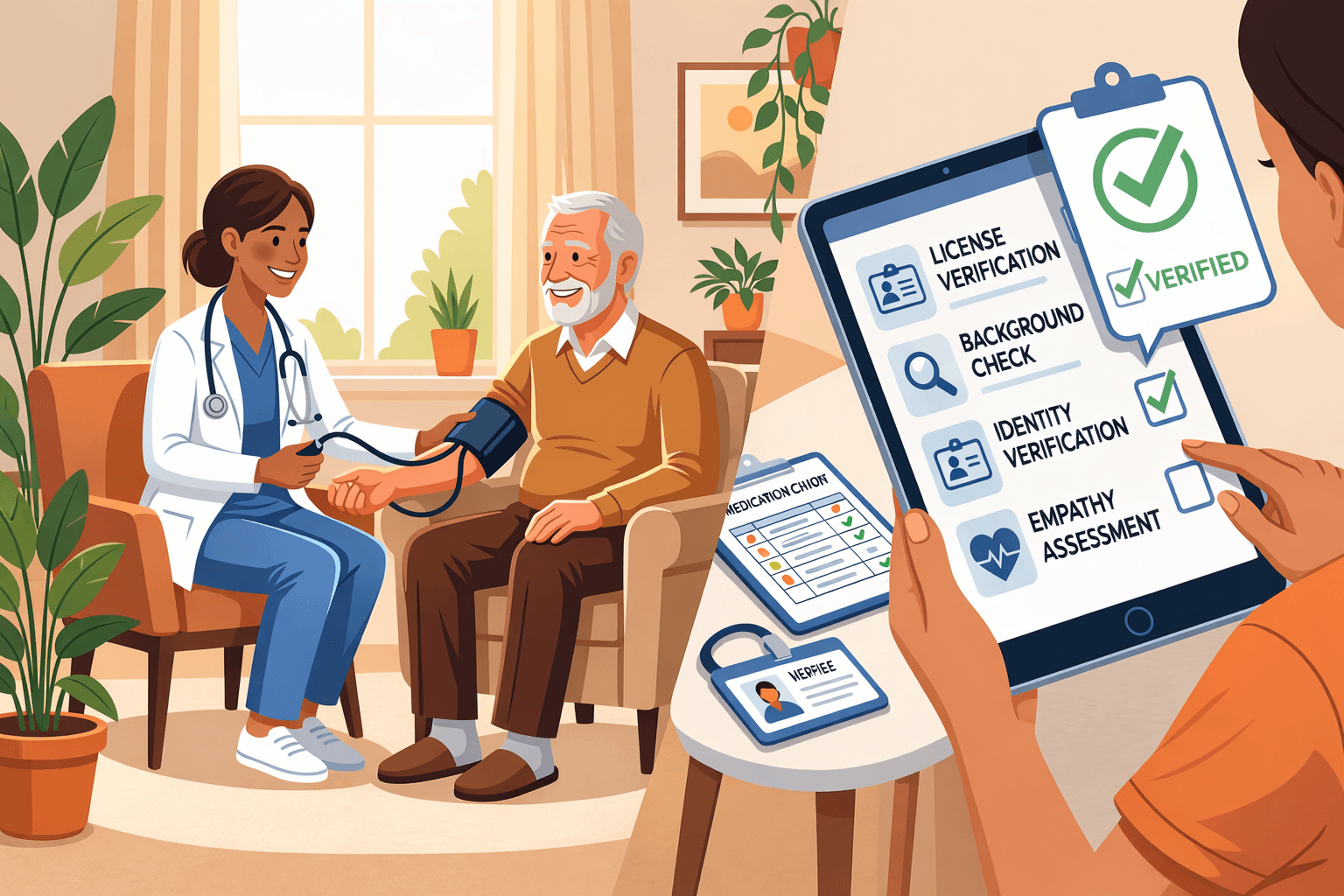
Your loved one is home, but the care journey is just beginning. Whether for post-surgery recovery, chronic illness management, or new mother support, the need for professional help is clear. But hiring a private nurse can be overwhelming. You're not just hiring a skilled professional; you're inviting someone into your family's most vulnerable moments.
The stakes are high. How do you find someone with the right medical skills and a compassionate heart? How do you navigate background checks, interviews, and costs? This guide is your roadmap. We'll walk you through every step to find the right care, together.
1. The Heart of Home Care: Why a Private Nurse Makes a Difference
Professional medical support at home allows patients to heal in a familiar environment, preserving dignity and independence while reducing the stress and infection risks of hospitals. Patients often recover faster and experience better emotional well-being when surrounded by the comforts of home.
[Image: A smiling nurse checking the blood pressure of an elderly man sitting comfortably in his living room.]
The Comfort and Dignity of Home-Based Care
Home-based care preserves a patient's sense of control and routine. Waking up in one's own bed, eating familiar meals, and staying connected to daily rituals provides emotional stability that accelerates healing. This is a key reason why elderly care at home is so important. Care revolves around the patient's preferences, not an institution's schedule. This personalized approach protects dignity and fosters a trusting relationship with a consistent caregiver.
Addressing Diverse Medical Needs with Professional Support
Private nurses manage a wide spectrum of health conditions, from post-operative wound care and medication management to chronic illness support and palliative care. Matching the right clinical expertise to your family's needs is the foundation of successful home care.
For example, effective home nursing for chronic illness focuses on long-term monitoring, while specialised needs like post-natal recovery are best served by professionals trained in services like Japa Care for new mothers.
2. Decoding Home Care Roles: Understanding Who You Need
Choosing the right professional requires understanding the differences between nurses, attendants, and assistants. These roles have distinct qualifications and duties. Hiring someone overqualified is costly, while hiring someone under-qualified is dangerous. It's vital to match the professional's skills to the patient's medical needs.
Nurses vs. Attendants: Clarifying Qualifications and Duties
Registered Nurses (RNs) hold formal degrees and are licensed for complex medical tasks. In contrast, attendants or General Duty Assistants (GDAs) provide non-medical personal care and support with daily activities. A semi-nurse may have some training but lacks qualifications for advanced procedures.
Here is a breakdown of their roles:
Role | Qualifications & Training | Key Responsibilities |
|---|---|---|
Registered Nurse (RN) or Nurse | Bachelor's degree or diploma in nursing; state-licensed. | Administering medications (including injections), wound care, managing medical equipment, patient assessment. |
Licensed Practical Nurse (LPN) or Semi-Nurse | 1-2 year nursing program; works under an RN. | Monitoring vital signs, administering basic medications, dressing changes, assisting with personal care. |
Attendant / GDA | No formal nursing degree; often certified or trained on the job. | Bathing, dressing, meal preparation, mobility support, companionship, medication reminders. |
An Registered Nurse is essential for complex medical needs. For stable patients needing help with daily living, a home health care attendant is the appropriate choice. In case of vital monitoring and not major wound dressing , a semi-nurse would be the suitable profile at an affordable cost.
Specialised Care: When Specific Expertise is Essential
Certain conditions demand nurses with specialised training. For palliative care, post-operative rehabilitation, or critical care at home, a specialist ensures the highest standard of safety and effectiveness. For example, a nurse specialising in at-home knee replacement rehab provides targeted support. Similarly, managing a patient needing intensive support requires expertise like that in an ICU at home setting. Always ask about a candidate's experience with your loved one's specific condition.
3. Your Hiring Roadmap: A Step-by-Step Guide to Finding the Right Fit
A structured hiring process helps you find a reliable and skilled private nurse. This roadmap involves assessing your needs, choosing between an agency or independent hiring, and conducting a thorough search. Following these steps helps you avoid pitfalls and find a caregiver who is an asset to your family.
Step 1: Assessing Your Family's Unique Care Needs
Before you search, create a detailed list of your family's requirements. This assessment should cover medical tasks, daily living assistance, scheduling needs, and personality preferences. A clear understanding of your needs is the foundation for finding a successful match.
Your assessment should include:
Medical Needs: List all diagnoses, medications, required treatments (e.g., wound care, injections), and necessary monitoring (e.g., blood pressure, glucose levels).
Daily Activities: Note any help needed with bathing, dressing, eating, or mobility.
Schedule: Determine if you need a 24-hour caretaker, 12-hour shifts, or just a few hours per day.
Personality: Consider if the patient would prefer a quiet caregiver or someone more talkative and engaging.
Step 2: Choosing Your Path: Staffing Company vs. Independent Hiring
You can hire a private nurse through an agency or find an independent caregiver directly. Agencies handle vetting, payroll, and backup care for security and convenience. Direct hiring may cost less but places all responsibilities on you.
Here’s a comparison to help you decide:
Feature | Staffing Company | Independent Hiring |
|---|---|---|
Vetting & Background Checks | Handled by the agency. | Your full responsibility. |
Backup Coverage | Replacement guarantee if the nurse is sick or leaves. | You must find a replacement on your own. |
Administrative Tasks | Agency manages payroll, taxes, and contracts. | You are the employer and handle all paperwork. |
Cost | Higher due to management fees and guarantees. | Potentially lower, with no overhead. |
Speed & Convenience | Fast placement, often within hours. | Can be a slow and time-consuming process. |
For peace of mind, the benefits of using a trusted medical staffing solution like Heka Health often outweigh the extra cost.
Step 3: Crafting Your Search and Initial Outreach
Once you know your needs, create a clear job description. This is your primary tool for attracting qualified candidates, whether posting on a job board or providing requirements to an agency. Be specific about duties, qualifications, and the schedule.
Your job description should clearly state:
The type of professional needed (RN, Attendant, etc.).
Key responsibilities and medical tasks.
Required experience with specific conditions.
The work schedule and location.
Compensation range and payment terms.
Clear communication from the start ensures only suitable candidates apply, saving you time.
4. Beyond the Resume: Vetting for Expertise and Empathy
Thoroughly vetting a candidate is the most critical step. This goes beyond a resume to include verifying credentials, checking references, and conducting an in-depth interview. This due diligence protects your loved one and ensures you hire a caregiver who is both competent and compassionate.
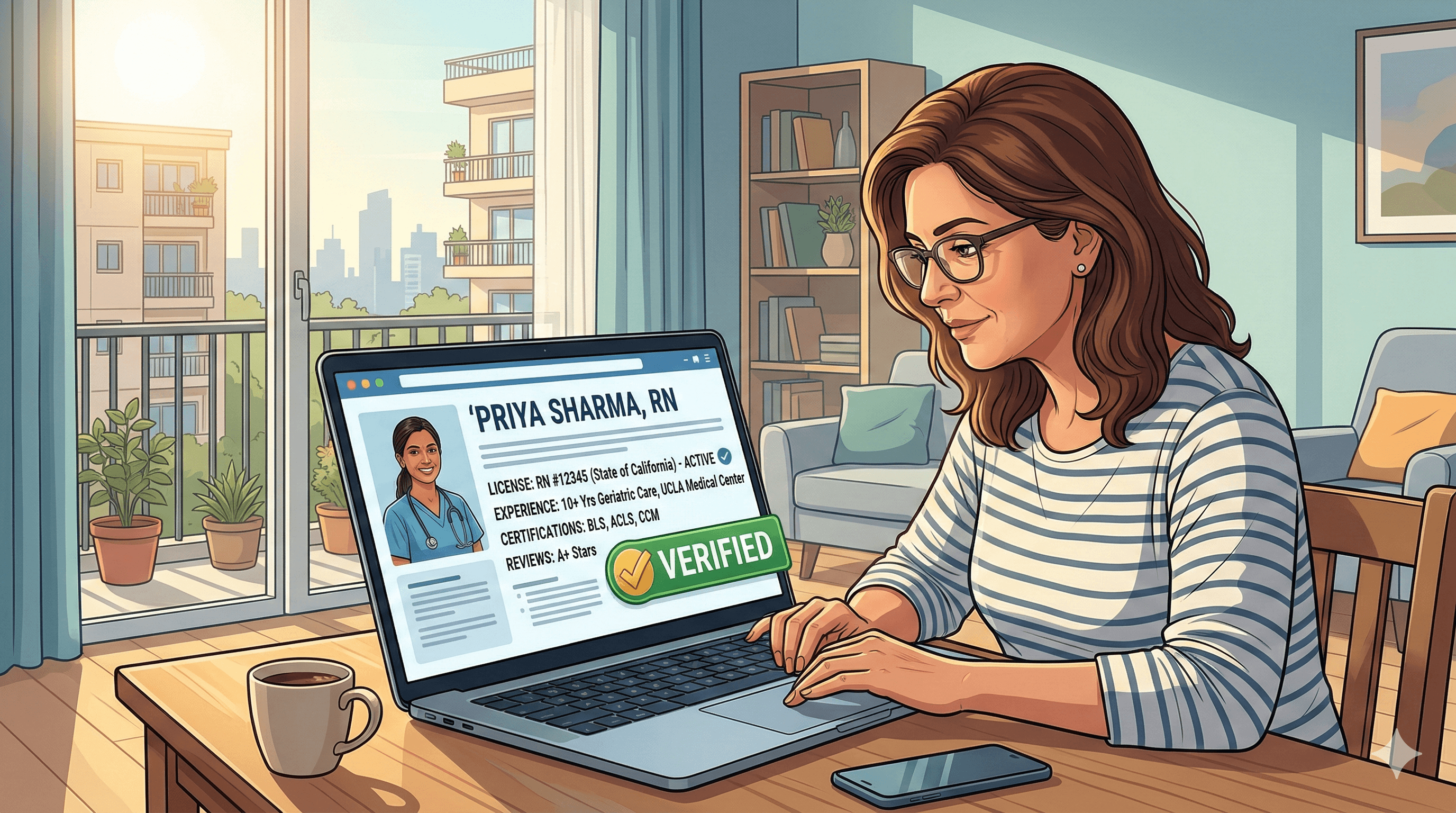
Essential Background Checks and License Verification
Never skip formal verification. This is non-negotiable for patient safety and quality of care. A professional caregiver should willingly provide all necessary documentation.
Your checklist must include:
License Verification: Confirm that a nurse's license is active and in good standing with the relevant state nursing board.
Criminal Background Check: A thorough check is essential for anyone working in your home with a vulnerable person.
Identity Verification: Confirm their identity using official documents like an Aadhar card.
The Art of the Interview: Questions That Reveal True Capability and Compassion
The interview is your chance to assess clinical skills and personal qualities. Ask questions that prompt detailed responses about their experience and approach to care. Pay attention to what they say and how they say it.
Key interview questions to ask:
"Can you describe your experience with patients who have [patient's condition]?"
"How would you handle a medical emergency, like a fall or sudden change in vital signs?"
"How do you communicate with family members about a patient's progress or concerns?"
"What do you find most rewarding about being a caregiver? What do you find most challenging?"
"How do you handle a patient who is uncooperative or having a difficult day?"
Look for a balance of confidence and genuine empathy.
5. Preparing Your Home for a Seamless Care Experience
Creating a safe, organised, and welcoming environment is key to a successful home care arrangement. Proper preparation ensures the nurse can work effectively and helps your loved one feel comfortable, minimising risks and setting the stage for a positive relationship.
Creating a Safe and Supportive Environment
Before the nurse arrives, prepare your home to accommodate the patient's needs and the caregiver's work. This includes setting up medical equipment, ensuring accessibility, and maintaining hygiene.
Use this checklist to get started:
Clear Pathways: Remove clutter, rugs, and electrical cords to prevent falls.
Medical Station: Designate an area to store medical supplies, medications, and records.
Equipment Setup: Ensure all necessary medical equipment is clean, accessible, and in working order.
Hygiene Supplies: Stock up on gloves, hand sanitiser, and other essential hygiene products.
Caregiver's Space: If the nurse is living in, provide a clean, private, and comfortable space for them to rest.
Setting Clear Expectations and Communication Channels
Establish clear communication protocols from the beginning. A successful partnership depends on everyone understanding their roles, responsibilities, and how to share information. This prevents misunderstandings and builds trust.
Discuss and document key details, including:
The daily care schedule and patient routines.
A list of emergency contacts and physician information.
Patient preferences for meals, activities, and personal care.
A plan for regular check-ins between the nurse and the family to discuss progress and address concerns.
6. Navigating the Financials: Understanding Costs and Payment Options
Understanding the financial aspects of home nursing care helps you budget and avoid surprises. Costs vary based on the level of care, hours, and location. It's important to have a clear payment agreement before care begins.
Factors Influencing the Cost of Home Nursing Care
Several factors determine the cost of hiring a private nurse. Awareness of these variables helps you understand quotes and make an informed financial decision.
The primary cost drivers include:
Type of Professional: Registered Nurses cost more than attendants due to their advanced skills and qualifications.
Hours of Care: A 24-hour caretaker will have a higher cost than one working an 8-hour shift.
Complexity of Care: Patients with complex medical needs require more skilled (and therefore more expensive) care.
Geographic Location: Rates for home care services vary between cities and regions.
Understanding Payment Structures and Potential Coverage
Discuss payment terms upfront. Most agencies and independent caregivers have weekly or monthly schedules. Reputable providers like Heka Health offer flexible payment options.
In India, insurance coverage for home healthcare is evolving. Some policies may cover post-hospitalization nursing care for a limited time. Check directly with your insurance provider to understand what services are covered.
7. Building a Lasting Partnership: Managing the Ongoing Relationship
Hiring a nurse is just the beginning; a positive long-term relationship ensures consistent, high-quality care. This requires open communication, mutual respect, and a plan for handling challenges. A strong partnership benefits everyone involved.
Effective Communication and Conflict Resolution
Regular, open communication is the cornerstone of a successful relationship. Schedule weekly check-ins to discuss progress, share feedback, and address issues before they grow. Treat the caregiver as a professional partner. If a disagreement arises, address it promptly and respectfully. Listen to the caregiver's perspective and work together on a solution that prioritizes the patient.
Contingency Planning and Ensuring Continuity of Care
It's crucial to have a backup plan for when your nurse is sick or has an emergency. An independent caregiver's absence can leave you without support. This is a major advantage of working with an agency. Providers like Heka Health offer a replacement guarantee, ensuring a qualified professional is always available for seamless, uninterrupted care. This safety net provides peace of mind for families.
8. Red Flags and Common Mistakes to Avoid When Hiring
Awareness of red flags helps you avoid hiring the wrong person and protects your loved one from unsafe care. Trust your instincts during the hiring process. If something feels off, it probably is.
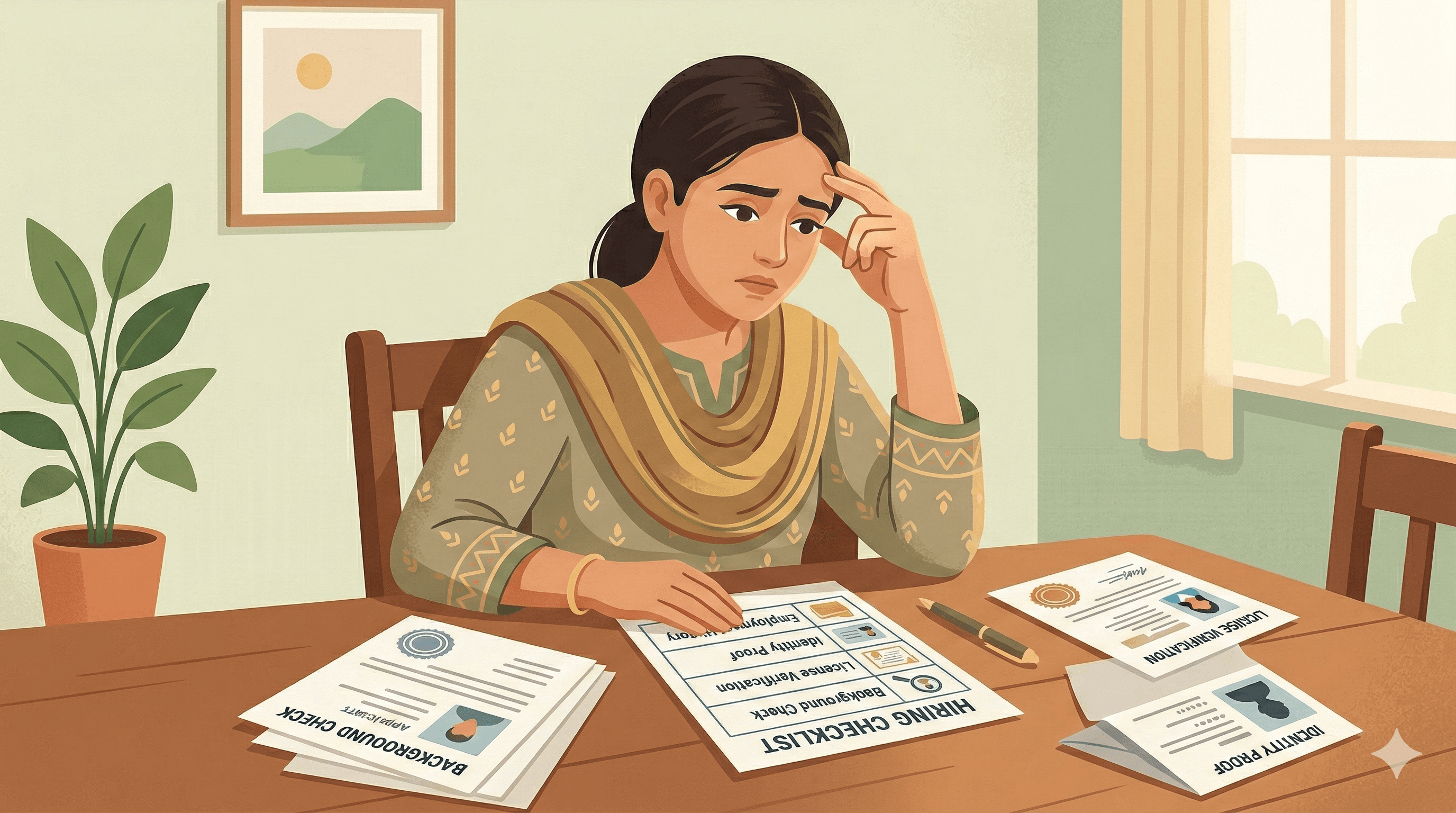
Watch out for these common warning signs:
Unwillingness to Provide Documents: Hesitation to share licenses, credentials, or references is a major red flag.
Lack of Verifiable Experience: Vague answers about past jobs or an inability to provide professional references.
Poor Communication Skills: Difficulty explaining procedures or an unprofessional demeanor during the interview.
Demanding Cash Upfront: Insisting on large cash payments without a formal contract or agreement.
No Official Degree or Identity Proof: Inability to produce an official degree, Aadhar card, or other valid identification.
Apathy or Lack of Empathy: Seeming disinterested in the patient as a person and focusing only on the tasks.
Conclusion: Your Path to Confident Home Care
Hiring a private nurse is a significant decision, but it doesn't have to be stressful. By assessing your needs, vetting candidates, and preparing your home, you can find a caregiver who provides expert medical care and compassion. The right professional becomes a trusted partner, bringing healing and peace of mind. The goal is to build a support system that allows your loved one to thrive at home. With careful planning, you can confidently navigate this journey.
Ready to find trusted, professional care for your family? Explore Heka Health's comprehensive home care services or contact us today to speak with a care manager.
Frequently Asked Questions (FAQs)
How quickly can I hire a home nurse?
With a professional agency like Heka Health, the process can be very fast. We can often match you with a vetted and qualified caregiver within just 4 hours of your request, ensuring your loved one gets the support they need without delay.
What is the difference between a nurse and an attendant?
A nurse is a licensed medical professional with a formal degree who can perform clinical tasks like administering medication, managing wounds, and operating medical equipment. An attendant provides non-medical personal care, such as help with bathing, dressing, meals, and mobility.
What should I do if the caregiver I hired is not a good fit?
If the match isn't right, it's important to address it immediately. If you hired independently, you'll have to start the search over. A key benefit of using an agency like Heka Health is our replacement guarantee, which allows us to find a better-suited caregiver quickly and seamlessly.
How much does it cost to hire a private nurse at home?
The cost varies based on the professional's qualifications (RN vs. attendant), the number of hours required per day, the complexity of the patient's medical needs, and your geographic location. It's best to get a detailed quote based on a thorough assessment of your specific needs however you can account for INR 35000-56000 as a monthly expense for this service.
Your well-being
is our priority.
Together, let's navigate every step
with care and compassion.

Your well-being
is our priority.
Together, let's navigate every step
with care and compassion.
Your well-being
is our priority.
Together, let's navigate every step
with care and compassion.