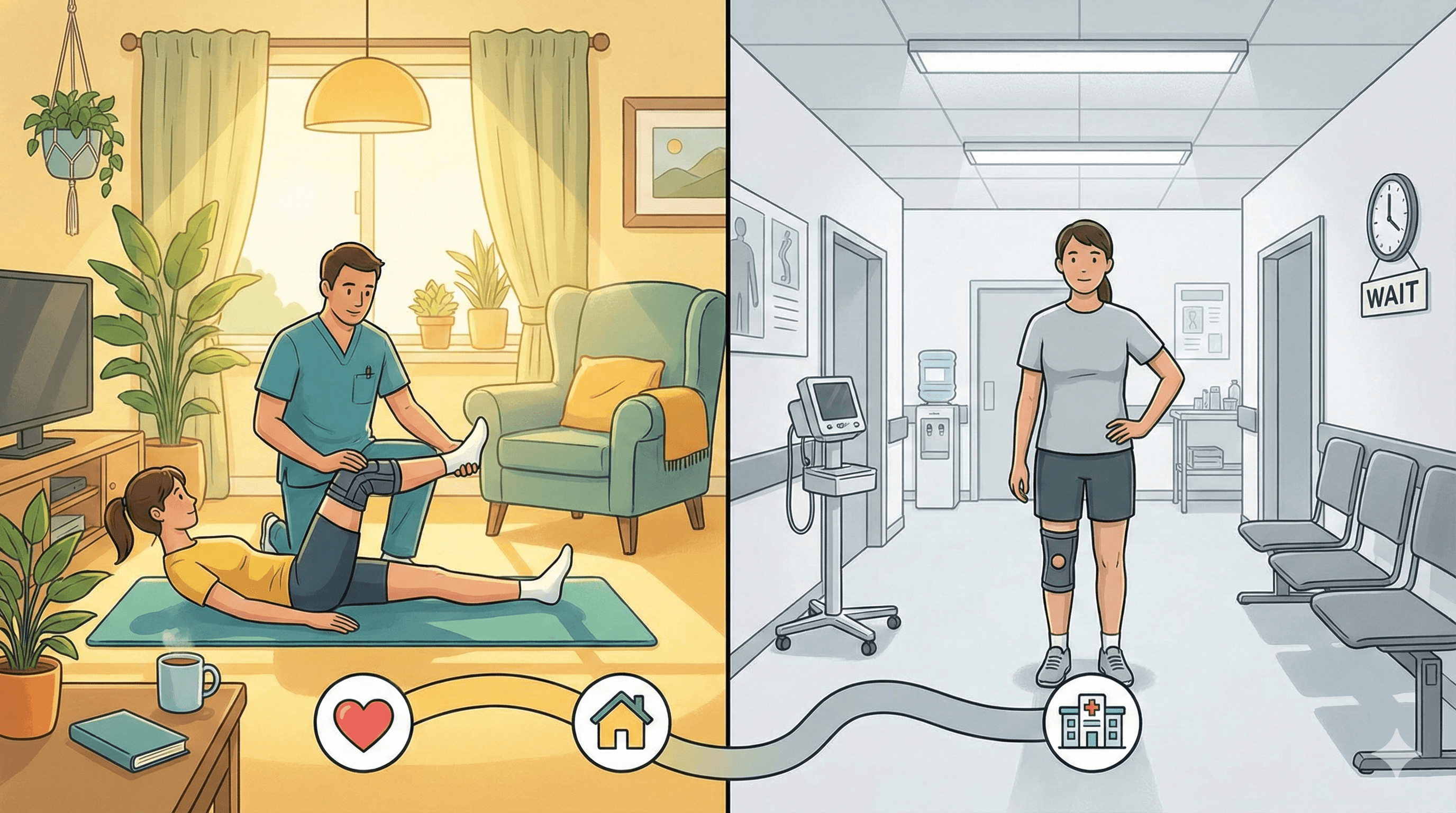
Knee replacement surgery changes lives. After months or years of chronic pain limiting every movement, patients finally get relief through total knee replacement. But here's what surgeons often don't emphasise enough: the surgery itself is only half the battle. The real determinant of success lies in the rehabilitation that follows.
With over 90-95% success rates for total knee replacement in India, most patients experience significant pain relief and improved mobility after surgery. However, the quality of post-operative physiotherapy directly influences how well patients recover, how quickly they regain function, and whether they achieve their full range of motion. For many recovering in their own homes, the choice between clinic-based physio and home physiotherapy becomes crucial.
Why does post-TKR physiotherapy matter so much?
Total knee replacement surgery replaces damaged cartilage and bone with artificial implants. Whilst the surgical procedure itself takes just a few hours, the recovery process stretches across three to six months.
During this critical period, physiotherapy determines whether patients achieve optimal outcomes or settle for limited results.
Post-surgery physiotherapy serves multiple essential functions:
Restores range of motion that surgery alone cannot provide.
Strengthens muscles around the knee joint that have weakened during months of limited activity before surgery.
Prevents scar tissue buildup that can restrict movement.
Teaches safe movement patterns, preventing falls or implant damage.
Manages pain through appropriate exercises and techniques.
Builds confidence in using the new knee for daily activities.
According to research on quality of life following physiotherapy, patients undergoing total knee replacement show statistically significant improvement in all domains of function and quality of life after structured physiotherapy management. This improvement doesn't happen by chance; it results from consistent, targeted rehabilitation.
What makes home physiotherapy more effective than clinic visits?
Travelling to a clinic after knee surgery can be tiring and uncomfortable, even before therapy begins. Home physiotherapy removes this strain and supports recovery more practically.
Why home rehab works better:
Real-world training: Exercises are done using the patient’s own stairs, furniture, and bathroom, not generic clinic setups.
One-to-one care: Full attention from the physiotherapist, without juggling multiple patients.
Better consistency: Fewer missed sessions and steadier progress without travel barriers.
Family support: Caregivers learn how to help safely and spot issues early.
Greater comfort: Familiar surroundings reduce anxiety and help manage pain.
Across recovery settings, care delivered at home consistently leads to better outcomes, and post-knee replacement rehab is no different.
As we explored in our discussion about professional home healthcare versus hospital stays, the home environment consistently produces better patient outcomes across various recovery scenarios, and post-TKR rehabilitation proves no exception.
How soon should physiotherapy begin after knee replacement?
Timing matters enormously in post-operative rehabilitation. Modern knee replacement protocols emphasise early mobilisation, with most patients beginning movement within 24 hours of surgery whilst still in hospital.
This early start prevents complications like blood clots, maintains circulation, and establishes the foundation for recovery.
Post-discharge physiotherapy timeline:
Recovery phase | Timeframe | Focus areas |
Immediate post-op | 0-2 weeks | Gentle range of motion exercises, ankle pumps, quad sets, basic transfers, wound care monitoring |
Early rehabilitation | 2-6 weeks | Progressive strengthening, increased range of motion, gait training, stair practice, balance work |
Active recovery | 6-12 weeks | Advanced strengthening, endurance building, functional activities, and return to daily life tasks |
Long-term conditioning | 3-6 months | Continued strength progression, sports-specific training if applicable, full activity restoration |
Home physiotherapy accommodates this progression seamlessly. Therapists visit according to the patient's needs, whether daily in early weeks or twice weekly as recovery advances.
This flexibility ensures patients receive appropriate intensity at each stage without the physical strain of clinic visits.
What does a typical home physiotherapy session include?
Understanding what happens during home physio sessions helps patients prepare and maximise the benefit from each visit. Professional physiotherapy services follow structured protocols whilst adapting to individual needs.
Components of post-TKR home physiotherapy:
Assessment: Checking range of motion, strength, swelling, pain levels, and comparing progress to previous sessions.
Manual therapy: Hands-on techniques including joint mobilisation, soft tissue massage, and scar tissue management.
Exercise programme: Guided practice of strengthening, flexibility, and balance exercises with proper form correction.
Gait training: Walking practice with focus on normal stride patterns, weight distribution, and eliminating compensatory movements.
Functional activities: Practising real-life movements like sitting to standing, stair climbing, squatting, and bending.
Pain management: Application of ice, heat, or electrical modalities as needed for comfort.
Education: Teaching proper positioning, activity modification, and home exercise progression.
Goal setting: Establishing realistic targets for improvement before the next session.
Sessions typically last 45-60 minutes, providing ample time for comprehensive treatment without the rushed feeling common in busy clinic environments.
Is home physiotherapy more affordable than clinic visits?
Cost considerations influence many healthcare decisions, and physiotherapy is no exception. Comparing expenses between clinic-based and home-based care reveals interesting realities.
According to available data, clinic physiotherapy sessions in India typically range from ₹500 to ₹1,500 per session. Home physiotherapy visits generally cost ₹800 to ₹2,000 per session, reflecting the 30-40% premium for travel and personalised attention. At first glance, home care appears more expensive.
However, calculating total costs reveals a different picture:
Travel expenses: Eliminated with home physiotherapy, whereas clinic visits require transportation costs for the patient and the accompanying family member.
Time costs: No lost productivity for working family members who must accompany patients to clinics.
Consistency value: Better adherence to home programmes means faster recovery and fewer total sessions needed.
Complication prevention: Early problem identification reduces expensive setbacks requiring additional medical intervention.
Package options: Many home physiotherapy providers offer discounted packages, with 10-session bundles around ₹6,000-7,000 or monthly plans near ₹15,000.
For elderly patients or those with limited mobility, the convenience and safety of home care often justify any modest cost difference. The value extends beyond rupees to include reduced stress, better outcomes, and maintained dignity throughout recovery.
What questions should you ask before choosing a home physiotherapist?
Selecting the right physiotherapist significantly impacts recovery outcomes. Not all providers offer equal expertise or service quality.
Essential questions to ask:
What specific experience do you have with post-knee replacement rehabilitation?
Are you certified and registered with professional physiotherapy associations?
What equipment do you bring for home sessions?
How do you coordinate with my surgeon regarding my specific case?
What is your emergency contact protocol if problems arise between sessions?
Can you provide references from other post-TKR patients you've treated?
What happens if I'm not progressing as expected?
Do you offer package pricing or flexible scheduling options?
Will the same physiotherapist conduct all my sessions for continuity?
Qualified physiotherapists welcome these questions and provide clear, confident answers. Their willingness to communicate openly indicates the professional relationship you'll experience throughout treatment.
Recover faster after knee replacement with home physiotherapy
Total knee replacement offers life-changing relief from chronic pain and disability. With proper rehabilitation, patients can expect their implants to last 15-20 years or more, during which they enjoy significantly improved mobility and quality of life.
Home physiotherapy removes barriers to optimal recovery whilst providing personalised, convenient, and effective rehabilitation. By bringing expert care directly to patients' homes, it ensures the surgery's promise of pain-free mobility becomes reality rather than remaining an unrealised potential.
The weeks following knee replacement surgery represent a crucial window where consistent, quality physiotherapy determines long-term outcomes. Choosing home-based care means choosing convenience, personalisation, and the best possible environment for healing.
If you or a loved one is preparing for knee replacement surgery or is currently recovering, consider how home physiotherapy can support your rehabilitation journey.
Contact us to discuss personalised physiotherapy services that bring expert care directly to your doorstep, helping you achieve the active, pain-free life you deserve.
Your well-being
is our priority.
Together, let's navigate every step
with care and compassion.

Your well-being
is our priority.
Together, let's navigate every step
with care and compassion.
Your well-being
is our priority.
Together, let's navigate every step
with care and compassion.