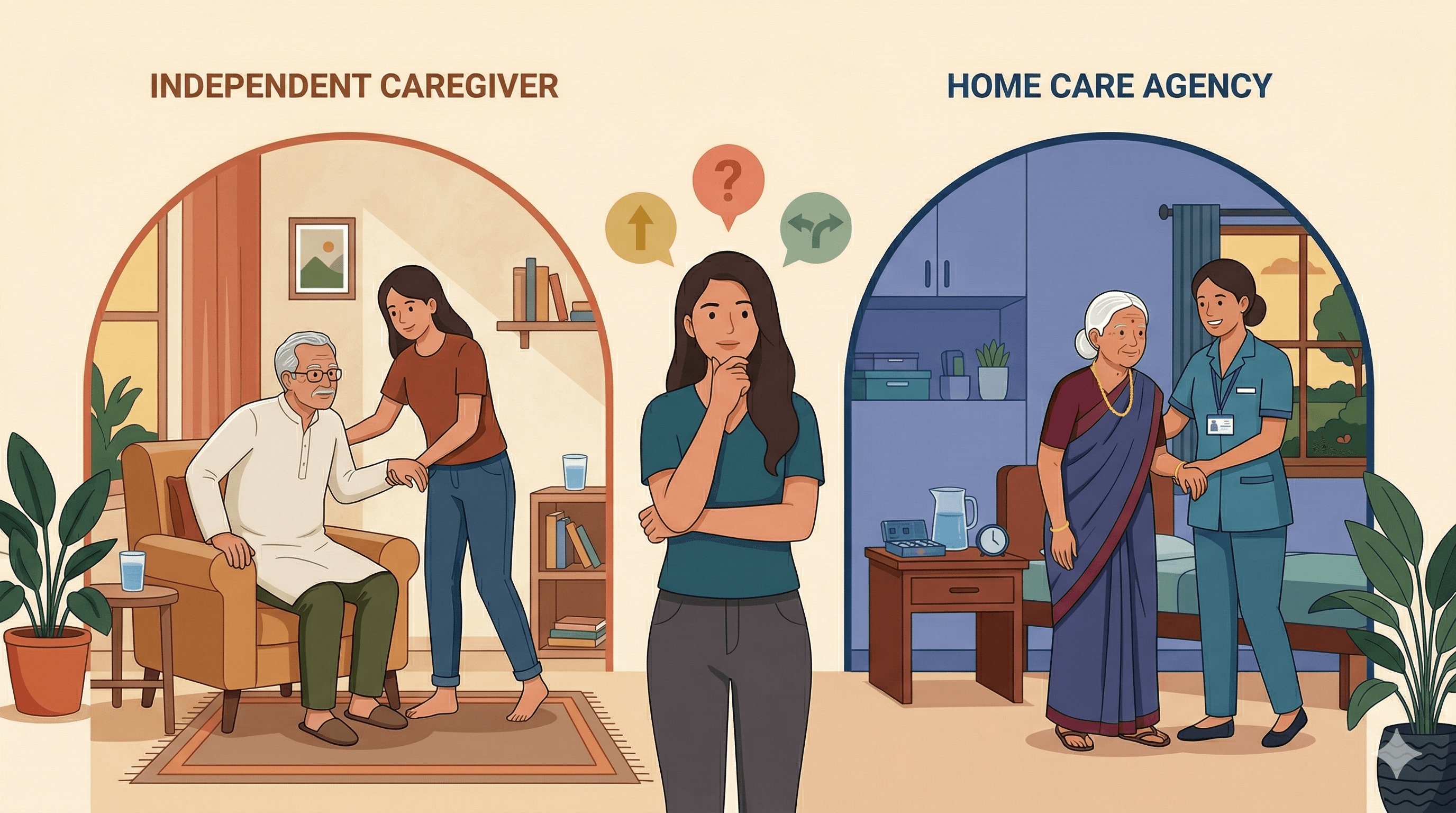
Introduction: The heart of the matter, choosing the right home care for your loved ones
When your mother forgets her medication or your father struggles with daily tasks, you face a decision that weighs heavily on your heart. The question isn't just whether they need care, but who should provide it. It's a choice between hiring someone directly or working with a professional agency, and it will shape your family's future.
Understanding why elderly care at home is so important is the first step. As you begin to notice the signs your elderly parent needs professional help, it's crucial to understand your options. At Heka Health, we believe that care should feel like family.
Understanding your options: defining independent caregivers and home care agencies
The core difference between an independent caregiver and a home care agency lies in who acts as the employer. When you hire an independent caregiver, you are the employer, responsible for everything from vetting to payroll. With an agency, the organization employs the caregiver, managing all administrative, legal, and quality control aspects for you.
What an independent caregiver offers
An independent caregiver is an individual you hire directly through personal networks or online platforms. They report to you and provide services you negotiate together, which often include personal care, companionship, and light housekeeping.
The relationship is direct and can feel very personal. You manage everything: interviews, reference checks, scheduling, and conflict resolution. If your caregiver is sick or on vacation, you are responsible for finding a replacement. This hands-on approach can foster a close bond but requires significant time and effort from the family.
The comprehensive support of a home care agency
A home care agency is a professional organization that recruits, vets, trains, and manages a team of caregivers. When you partner with an agency, you are buying into a complete system of support and quality assurance, not just hiring an individual.
Agencies offer a wider range of services, including skilled nursing, physiotherapy, and specialized support for conditions like dementia. This model is ideal for families who need more than basic help or who can't manage the logistics of direct employment. The agency handles background checks, training, payroll, and provides replacements, ensuring continuity of care. With comprehensive elderly care services from a provider like Heka Health, you gain a partner who manages the details, letting you focus on your loved one. This is a key advantage of professional home healthcare vs hospital stays.
The financial equation: costs, value, and hidden fees
The cost of care is a primary concern for families, and at first glance, independent caregivers seem cheaper. While their hourly rates are often 20-30% lower, this doesn't account for the hidden costs and responsibilities you take on as an employer. A true comparison requires looking at the total value, not just the initial price tag.
Deconstructing the cost of independent care
Hiring an independent caregiver means you are responsible for more than just their wages. As their employer, you must handle payroll taxes, potential contributions to social security schemes like the Provident Fund (PF) and Employee State Insurance (ESI), and the cost of background checks.
You also cover sick days and vacation time, often paying for a replacement while the primary caregiver is away. Don't forget the cost of your own time spent on recruitment, interviews, and ongoing management. These indirect expenses can quickly close the initial price gap.
Cost Category | Direct Expense | Hidden/Indirect Expense |
|---|---|---|
Wages | Hourly or monthly salary | Overtime pay, bonuses |
Insurance | None required | Personal liability for accidents |
Recruitment | Platform fees (if any) | Your time, background check fees |
Management | None | Your time for scheduling, supervision |
Backup Care | Cost of a new hire | Gaps in care, stress of finding help |
Understanding agency pricing and its inherent value
Agency fees may seem higher, but they bundle services and protections that you would otherwise have to manage or purchase separately. The price includes the caregiver's wages, all payroll taxes, and legal compliance. Agencies also carry liability insurance and worker's compensation, protecting your family from financial risk if a caregiver is injured in your home.
The most significant value comes from the agency's management services. They handle rigorous vetting, ongoing training, and performance supervision. Crucially, they provide a replacement guarantee. If a caregiver is sick or not a good fit, the agency sends a qualified substitute, ensuring seamless continuity of care. This peace of mind and administrative relief are built into the price, making it a more predictable and often more secure investment.
Ensuring trust and quality: vetting, training, and oversight
How can you be sure the person caring for your parent is trustworthy, skilled, and reliable? The processes for vetting and training differ dramatically between hiring independently and using an agency, directly impacting the quality and safety of care.
The family's role in vetting independent caregivers
When you hire independently, you are the sole person responsible for vetting. This involves conducting interviews, checking references, and attempting to run a background check. However, families often lack access to comprehensive criminal databases and may struggle to verify credentials or past employment effectively.
You're relying on your gut feeling and references provided by the candidate, which can be risky. A pleasant interview doesn't reveal how someone handles stress or emergencies when unsupervised. If issues arise later, the emotional burden of addressing them, and potentially firing someone your parent has grown attached to, falls entirely on you.
Agency standards: professional vetting, training, and continuous support
Reputable home care agencies have robust, multi-step vetting systems. This includes mandatory criminal background checks, identity verification, and confirmation of credentials and work history. At Heka Health, our "Heartfelt Trust" promise is backed by this rigorous process, ensuring every caregiver is not only qualified but also compassionate.
Agencies provide standardized training on safety protocols, mobility assistance, and emergency response. They also offer specialized training for complex conditions. For example, providing effective dementia care at home requires specific skills that agencies cultivate through dedicated programs. Furthermore, agencies offer continuous oversight through care managers who check in regularly, adjust care plans, and provide 24/7 support for both the family and the caregiver.
Navigating the legal and logistical landscape
Hiring a caregiver involves more than just finding the right person; it also means navigating a complex web of legal and logistical responsibilities. An agency shields you from these burdens, while hiring independently places them squarely on your shoulders.
The legal and administrative burden of direct employment
When you hire an independent caregiver, you become a household employer, subject to Indian labor laws. This includes paying at least the state-mandated minimum wage, managing payroll deductions like TDS, and potentially contributing to social security schemes. You are also legally liable for workplace accidents. If your caregiver gets injured in your home, you could be responsible for their medical bills and lost wages, a risk most standard homeowner's insurance policies do not cover.
Beyond the legalities, you manage all logistics: creating schedules, arranging backup for sick days, resolving conflicts, and sourcing supplies. For instance, arranging for medical equipment rentals to save money becomes another task on your plate.
Agencies: simplifying compliance and management
A home care agency acts as the employer of record, handling all legal, tax, and insurance obligations. They manage payroll, comply with labor laws, and carry liability and worker's compensation insurance. This insulates your family from legal risks and financial exposure.
The agency also manages all administrative logistics. They handle scheduling, provide replacements to ensure uninterrupted care, and mediate any issues that arise. This frees you from the stress of being a manager and allows you to focus on what truly matters: supporting your loved one. The peace of mind that comes from offloading this administrative burden is one of the primary benefits of working with an agency.
Beyond the basics: specialized needs and emotional well-being
Choosing a caregiver isn't just about covering daily tasks. It's also about finding the right support for complex health conditions and managing the emotional impact on your entire family. Agencies often have a distinct advantage in providing specialized skills and structured support that can reduce family stress.
Tailoring care for complex health conditions
If your loved one has a specific medical condition, the choice between an independent caregiver and an agency becomes even more critical. While an independent caregiver might have relevant experience, an agency provides access to a diverse team of vetted professionals with certified specializations.
For example, recovery from a stroke often requires a coordinated approach. An agency can provide not only an attendant for daily support but also a licensed therapist for home physiotherapy for stroke recovery. Similarly, agencies have caregivers specifically trained in post-natal Japa care or end-of-life palliative support. This access to a pool of specialized talent ensures the care plan can adapt as your loved one's needs evolve.

The emotional and psychological impact on families
Managing care for a loved one is emotionally taxing. The constant worry can lead to burnout, a serious issue that many family caregivers already feel. Hiring help is a crucial step, but the choice of provider can either add to your stress or alleviate it.
Managing an independent caregiver means you handle conflicts, performance issues, and last-minute schedule changes yourself. This can strain family dynamics. An agency acts as a professional buffer. They manage the caregiver, provide reliable replacements for respite, and offer a support system for your family. This structure helps prevent caregiver burnout and allows you to maintain a healthier, more supportive role with your parent.
Making the informed choice for your family
The best choice depends on your family's unique situation. To decide, consider your budget, the complexity of care needed, and how much time you can dedicate to managing the arrangement. An agency is often the superior choice for those who need reliability, specialized skills, and legal protection.
To make the right decision, ask yourself these questions:
What level of care is needed? Basic companionship or complex medical support?
How much time can I commit? Do I have time for recruitment, payroll, and management?
What is my comfort level with legal risk? Am I prepared to be an employer and assume liability?
How important is backup care? What will I do if our caregiver is suddenly unavailable?
The table below summarizes the key differences to help you compare.
Feature | Independent Caregiver | Home Care Agency |
|---|---|---|
Cost | Lower hourly rate, but with hidden costs (taxes, insurance). | Higher all-inclusive rate, but more predictable. |
Vetting & Safety | Family's responsibility; limited access to checks. | Professional background checks, insured, and bonded. |
Training | Varies; often unverified. | Standardized and specialized training with oversight. |
Reliability | Dependent on one person; no guaranteed backup. | Replacement guarantee ensures continuity of care. |
Legal Burden | Family is the employer and assumes all legal liability. | Agency is the employer and handles all legal compliance. |
Flexibility | High flexibility in tasks and schedules. | Structured, but with professional care plan management. |
For families seeking peace of mind, professional oversight, and a safety net, a home care agency like Heka Health is the clear choice. Our 3-step process makes it simple: reach out for a consultation, let us tailor a care plan, and begin healing with a trusted caregiver, often within hours.
Frequently asked questions about home caregivers
What is the primary difference between an independent caregiver and a home care agency?
An independent caregiver is hired directly by the family, making the family the employer responsible for vetting, payroll, and management. A home care agency employs, trains, and manages caregivers, providing a comprehensive service that handles all administrative and legal burdens for the family.
Are independent caregivers always cheaper than agency caregivers?
While independent caregivers may have lower hourly rates, the total cost is often closer than it appears. Families hiring independently must account for hidden costs like payroll taxes, insurance, recruitment time, and paying for backup care, which are all included in an agency's fee.
How can I ensure the safety and quality of a home caregiver?
With an independent caregiver, the family must conduct their own background and reference checks. Reputable agencies like Heka Health perform rigorous, professional vetting, including criminal background checks and credential verification, and provide ongoing training and supervision to ensure high-quality, safe care. A checklist for hiring a private nurse can be a helpful guide.
What if my chosen caregiver falls ill or needs time off?
If you hire an independent caregiver, finding a replacement is your responsibility, which can cause gaps in care. A key benefit of a home care agency is its replacement guarantee. The agency will provide a qualified substitute caregiver, ensuring your loved one receives continuous, uninterrupted support.
Does insurance cover home care services in India?
Coverage for home care in India varies widely by insurance provider and policy. Some health insurance plans may cover specific skilled services, like nursing or physiotherapy, if prescribed by a doctor. It is essential to check directly with your insurance provider to understand what your policy covers.
Your well-being
is our priority.
Together, let's navigate every step
with care and compassion.

Your well-being
is our priority.
Together, let's navigate every step
with care and compassion.
Your well-being
is our priority.
Together, let's navigate every step
with care and compassion.