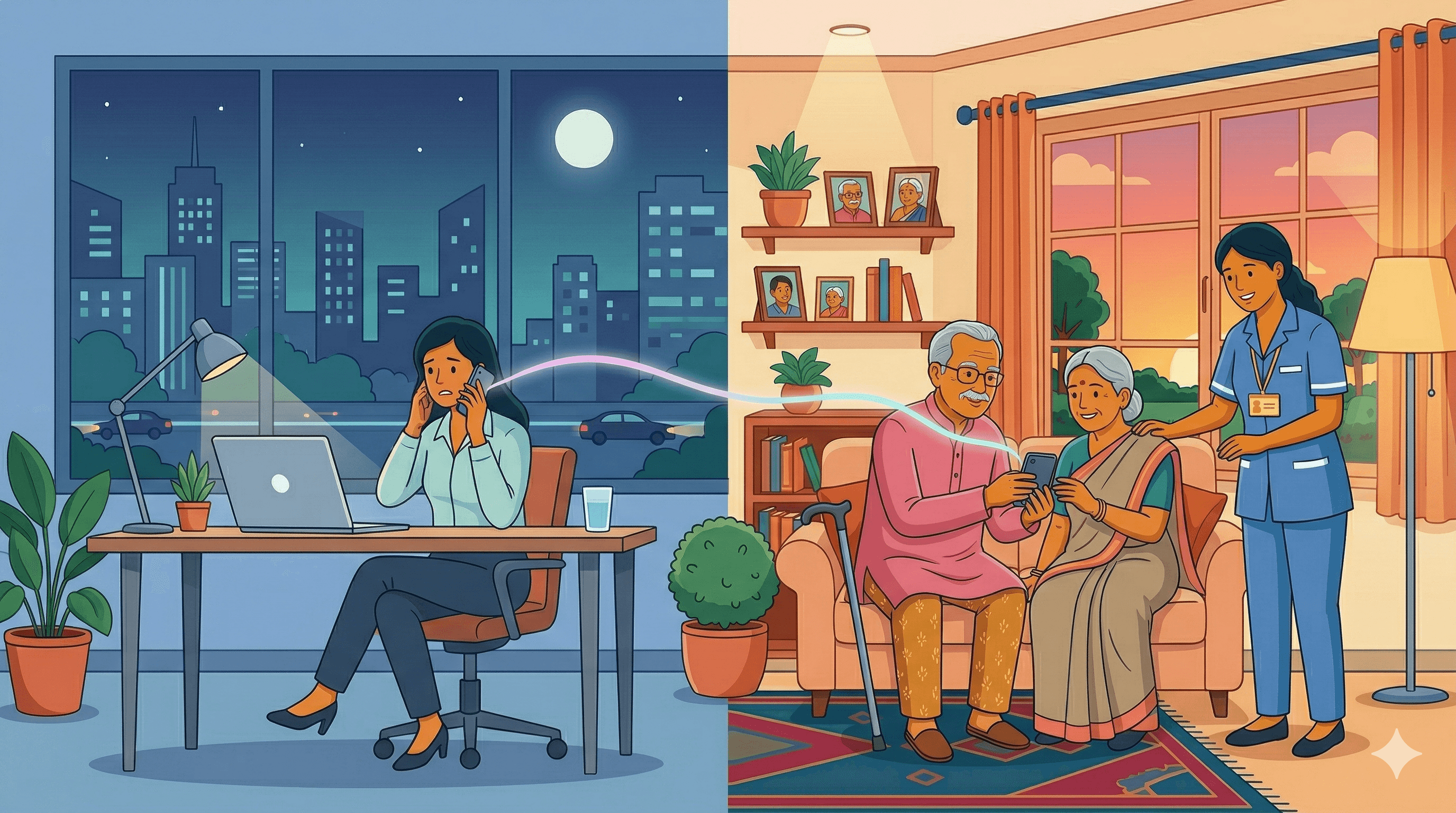
You're at your desk in New York, London, or Dubai when your phone rings at 2 AM. It's a neighbor in Mumbai. Your mother fell. She's okay, but shaken. You're 8,000 miles away, feeling helpless, calculating flight times and wondering if you should have seen this coming. This gut-wrenching fear is the reality for millions of Non-Resident Indians (NRIs) managing eldercare from abroad.
The distance creates a unique set of pressures. You aren't just arranging care, you're often doing it blind, relying on phone calls and secondhand reports. This guide is designed to change that. We'll walk you through the complete spectrum of long-distance eldercare and beyond, from assessing your parents' needs to building a reliable support system and navigating professional services. The goal is simple: to transform worry into a structured plan that gives your parents dignity and gives you peace of mind.
Understanding the unique challenges of long-distance eldercare
Long-distance eldercare involves managing your parents' health and daily needs from afar, a task complicated by time zones, communication gaps, and the emotional weight of being physically absent. The core challenge is building a reliable support system in India that provides both practical help and peace of mind when you can't be there.
The emotional toll on NRI children
Guilt is a heavy burden for most NRI children. You left for better opportunities, and now your parents are aging without you. Every missed festival or health scare you hear about hours later can compound this feeling. Anxiety becomes a constant companion as you worry about falls, medication errors, or loneliness. This is amplified by a sense of helplessness, knowing you can't just drive over to help during a crisis.
Practical hurdles of managing care from afar
Time zones create a coordination nightmare. A 9 AM emergency in India is the middle of the night in North America. You're left managing urgent calls while the world around you sleeps. Communication gaps are also a major issue. Parents may downplay symptoms to avoid worrying you, and verifying information from local services is nearly impossible without a trusted local contact.
Common concerns for elderly parents living alone
Loneliness can profoundly affect parents as their social circles shrink. This isolation isn't just sad, research shows it has measurable health impacts comparable to smoking. Health can also deteriorate faster without monitoring, as medication schedules slip and small symptoms go unreported. Safety risks, especially falls, increase, and managing daily chores like cooking and cleaning can become overwhelming. Many parents are reluctant to ask for help, which means problems often fester until they become a crisis.
How to assess your parents' needs beyond the obvious
A proper assessment goes beyond obvious health issues to evaluate physical, mental, social, and financial needs. This holistic view helps you create a proactive care plan that addresses current requirements and anticipates future challenges, ensuring your parents can maintain their independence and dignity for as long as possible. Start with honest, respectful conversations, emphasizing that planning together is the best way to honor their independence.
Physical and medical requirements
Start by listing all chronic conditions (diabetes, hypertension, arthritis), medications, and treating physicians. Note any mobility issues, as this affects everything from bathroom safety to grocery shopping. If mobility is declining, you may need to consider home modifications or support from a professional home caregiver. Also, ensure medication is managed correctly and that regular check-ups are scheduled.
Mental and emotional well-being
Look for subtle signs of loneliness, like frequent calls or social withdrawal. Be aware that depression in the elderly can mimic normal aging, so watch for persistent sadness, changes in sleep or appetite, or loss of interest in hobbies. Note any signs of cognitive decline, such as forgetfulness or confusion. If you have concerns, arranging a cognitive assessment is a crucial step, as dementia care at home requires a specialized approach.
Daily living assistance and social engagement
Evaluate their ability to manage daily tasks. Are they eating balanced meals? Can they keep the home clean and manage repairs? Is personal hygiene becoming difficult? Also, consider their transportation options. If they can no longer drive or use public transport easily, they risk becoming homebound. Finally, check if they are still engaged in hobbies and community activities, which are vital for cognitive health and purpose.
Financial and legal preparedness
Briefly assess their ability to manage finances. Can they still handle bill payments and track expenses without difficulty? Financial mismanagement can be an early sign of cognitive decline. This is also the time to ensure basic legal documents, like a Power of Attorney, are in place.
Building a robust local support system in India
A strong local support system is a multi-layered network of family, friends, community members, and professional services. This redundancy is key, as it ensures someone is always available to help in an emergency and provides you with multiple sources of information about your parents' well-being. No single person can do it all, so building a team is essential.
Leveraging family, friends, and community
Identify reliable local contacts, like relatives or trusted neighbors, who can be your eyes and ears on the ground. Be clear about what you need, whether it's a weekly check-in call or being an emergency contact. People are more willing to help when expectations are clear. Foster open communication and express your gratitude regularly to maintain these crucial relationships.
The role of professional home care services
Trained caregivers and nurses provide consistent, skilled support that informal networks cannot match. Professional services are the backbone of modern eldercare, offering vetted staff, accountability, and replacement guarantees. This organized approach provides invaluable peace of mind, transforming the experience from constant anxiety to manageable oversight. Understanding why elderly care at home is important helps frame this not as a loss of independence, but as a tool to extend it safely.
Ensuring home safety and accessibility
Simple home modifications can dramatically reduce risks. Install grab bars in bathrooms, improve lighting, and remove tripping hazards like loose rugs. Post an emergency contact list near every phone with numbers for you, neighbors, and doctors. Consider tech solutions like a medical alert system, which allows your parents to call for help with the press of a button.
Navigating professional home care services in India
Navigating India's home care market means choosing between different service levels, from basic attendants to skilled nurses. The key is to vet providers for reliability, training, and communication, ensuring they offer the specific support your parents need while giving you transparent oversight and control from abroad.
Types of home care: attendants, nurses, and specialized care
Understanding the different types of care is the first step. A general attendant helps with daily living, while a skilled nurse manages medical needs. Specialized services like physiotherapy or post-natal care address specific health situations.
Care Type | Key Responsibilities | Best For |
|---|---|---|
Attendant Care | Companionship, meal prep, bathing, mobility support, light housekeeping. | Elderly individuals who need help with daily routines but are medically stable. |
Skilled Nursing | Medication administration, wound care, injections, vital signs monitoring, catheter care. | Patients with chronic illnesses, post-surgery recovery, or complex medical needs. |
Specialized Care | Physiotherapy, dementia care, post-natal (Japa) care, post-operative support. | Patients needing targeted rehabilitation or condition-specific expertise. |
For example, a private nurse for home care is crucial after a hospital stay, while an attendant provides long-term daily support.
What to look for in a home care provider
When choosing a provider, prioritize these factors:
Vetting Process: Do they conduct thorough background checks and verify credentials?
Training: Are caregivers trained in geriatric care, first aid, and condition-specific support?
Reliability: Do they offer a replacement guarantee if a caregiver is unavailable or not a good fit?
Communication: Do they provide regular updates and have a clear point of contact for NRIs?
Supervision: Is there a manager who oversees the quality of care and makes regular visits?
The benefits of a trusted platform like Heka Health
A professional platform like Heka Health is designed to solve these challenges for NRIs. We offer a single, trusted source for all home healthcare needs. Our key benefits include:
Fast Hiring: We can place a verified caregiver in your parents' home in as little as 4 hours for urgent needs.
Replacement Guarantee: If the caregiver isn't the right fit, we find a replacement immediately, ensuring continuity of care.
Verified Professionals: Our 350+ professionals are rigorously vetted for skill, experience, and compassion.
24/7 Support: A dedicated health manager is always available to answer your questions and manage care logistics.
Understanding costs and flexible payment options
Professional home care is a significant investment, but it offers better value and safety than unorganized help. Costs vary based on the level of care and hours required. Look for providers with transparent pricing and flexible payment options (weekly or monthly) that allow you to manage expenses without long-term lock-ins. Many services also facilitate medical equipment rentals, which is more cost-effective than purchasing.
Bridging the distance with technology and communication
Technology is a powerful tool for NRIs, helping to bridge the geographical gap through real-time communication, remote monitoring, and virtual health management. Using a combination of simple apps and smart devices, you can stay connected, enhance your parents' safety, and remain actively involved in their daily care.
Essential communication tools for families
Regular, scheduled video calls on platforms like WhatsApp, Skype, or Google Meet are non-negotiable. Seeing your parents' faces helps you gauge their emotional state and physical appearance better than a phone call. A shared family group chat can keep everyone, including local support contacts, in the loop.
Smart home devices for safety and monitoring
Consider installing smart home devices for an extra layer of security. Smart cameras in common areas (with your parents' consent) can provide peace of mind. Fall detection sensors can automatically alert you or emergency services. Smart pill dispensers can ensure medication is taken on time, and voice-activated assistants like Amazon Alexa can help parents easily call for help or control their environment.
Telemedicine and remote health management
Telemedicine has made it easier than ever to manage health from afar. You can join your parents' doctor consultations virtually to hear updates firsthand. Use digital platforms to store and share medical records. Remote monitoring devices that track blood pressure, glucose levels, or heart rate can send data directly to you and their physician, enabling proactive health management.
Essential legal and financial planning for NRI families
Proactive legal and financial planning is critical for managing your parents' affairs from abroad and preventing future complications. This involves setting up legal documents, securing adequate health insurance, and organizing estate matters to ensure their assets are protected and their wishes are respected.
Power of attorney and property management
A Power of Attorney (PoA) is the most important legal document for any NRI. It grants a trusted person the authority to make financial or medical decisions on your parents' behalf if they become incapacitated. Set this up while your parents are of sound mind. This document is essential for managing bank accounts, paying bills, and handling property matters from a distance.
Health insurance and financial security
Ensure your parents have comprehensive health insurance that covers hospitalization and critical illnesses. With Indian healthcare costs rising, a good policy is the best defense against financial shocks. Review their coverage annually to ensure it still meets their needs. This is often a better approach than comparing the costs of professional home healthcare vs hospital stays during an emergency.
Estate planning and wills
Encourage your parents to create or update their wills. This sensitive topic is best addressed early to avoid legal disputes and ensure their assets are distributed according to their wishes. Proper estate planning provides clarity and prevents unnecessary stress for the family later on.
Preparing for emergencies: a critical checklist
An emergency preparedness plan is a non-negotiable checklist for every NRI. It outlines clear protocols for medical crises, financial contingencies, and communication, ensuring that if the worst happens, your local support system can act quickly and decisively while keeping you informed.
Medical emergency protocols
Contacts: Create a list with emergency services, doctors, preferred hospitals, and local contacts. Post it physically and share it digitally.
Medical History: Keep a digital file with their complete medical history, allergies, medications, and insurance details.
Hospital Preference: Decide on a preferred hospital in advance and ensure your local contacts know it.
Financial contingency plans
Emergency Fund: Set aside a dedicated fund that is easily accessible in India for urgent medical expenses.
Access: Ensure a trusted local person has access to a debit card or funds for immediate needs.
Authorization: Have necessary bank authorizations in place so you can manage funds from abroad if needed.
Communication in crises
Primary Contact: Designate one local person as the primary point of contact to streamline information flow.
Communication Tree: Establish a clear communication chain. The primary contact calls you, and you then update other family members.
Decision-Maker: Clarify who the final decision-maker is for medical treatments to avoid confusion during a crisis.
Self-care for the NRI caregiver: managing guilt and stress
Caring for parents from a distance takes a significant emotional toll, often leading to guilt, stress, and burnout. Acknowledging this burden and actively practicing self-care is not selfish, it's essential for sustaining your ability to provide effective, long-term support for your loved ones.
Acknowledging the emotional burden
It's normal to feel guilty, anxious, or overwhelmed. You are juggling a life abroad with deep-seated responsibilities back home. Give yourself permission to feel these emotions without judgment. Recognizing them is the first step toward managing them.
Strategies for personal well-being
Set clear boundaries to protect your own time and mental health. You cannot be on call 24/7. Delegate tasks to your support network in India. Maintain your own health with proper sleep, nutrition, and exercise. Find a hobby or activity that helps you de-stress and disconnect from the constant worry.
Seeking support and resources
You are not alone in this journey. Connect with other NRIs in similar situations through online forums or local community groups. Sharing experiences can be incredibly validating. Don't hesitate to speak with a therapist or counselor who can provide strategies for managing stress and guilt.
Conclusion: finding peace of mind in comprehensive care
Caring for your aging parents in India while you live abroad is one of the most difficult challenges an NRI can face. The distance doesn't diminish your love or responsibility, it only complicates it. But with proactive planning, you can replace anxiety with a sense of control and confidence.
By thoroughly assessing your parents' needs, building a multi-layered support system, leveraging professional services, and preparing for emergencies, you can create a safe and supportive environment for them. Technology can help bridge the miles, but nothing replaces the peace of mind that comes from knowing a trusted, compassionate caregiver is there when you can't be.
At Heka Health, we understand this deeply. Our mission is to provide care that feels like family, honest, attentive, and never transactional. If you're ready to build a comprehensive care plan for your parents, connect with a Heka Health care manager today. Let us help you find peace of mind.
Frequently asked questions about NRI eldercare in India
How quickly can Heka Health provide a caregiver for my parents?
For urgent needs, Heka Health can match you with a trained and verified caregiver in as little as 4 hours, ensuring your parents get the support they need without delay.
What if the initial caregiver isn't a good fit for my parents?
We offer a replacement guarantee. If for any reason the caregiver is not a good match, we will work with you to find a suitable replacement promptly, ensuring a seamless continuation of care.
Can Heka Health assist with specialized care like post-natal support or physiotherapy?
Yes, Heka Health offers a comprehensive suite of services. This includes specialized Japa Care for new mothers and infants, as well as in-home physiotherapy for stroke recovery and other rehabilitation needs.
How does Heka Health ensure the safety and trustworthiness of its caregivers?
Our caregivers undergo a rigorous vetting process that includes background checks, credential verification, and in-depth interviews. We select professionals not only for their skills but also for their compassion and reliability, ensuring your parents are in safe, trustworthy hands.
Your well-being
is our priority.
Together, let's navigate every step
with care and compassion.

Your well-being
is our priority.
Together, let's navigate every step
with care and compassion.
Your well-being
is our priority.
Together, let's navigate every step
with care and compassion.