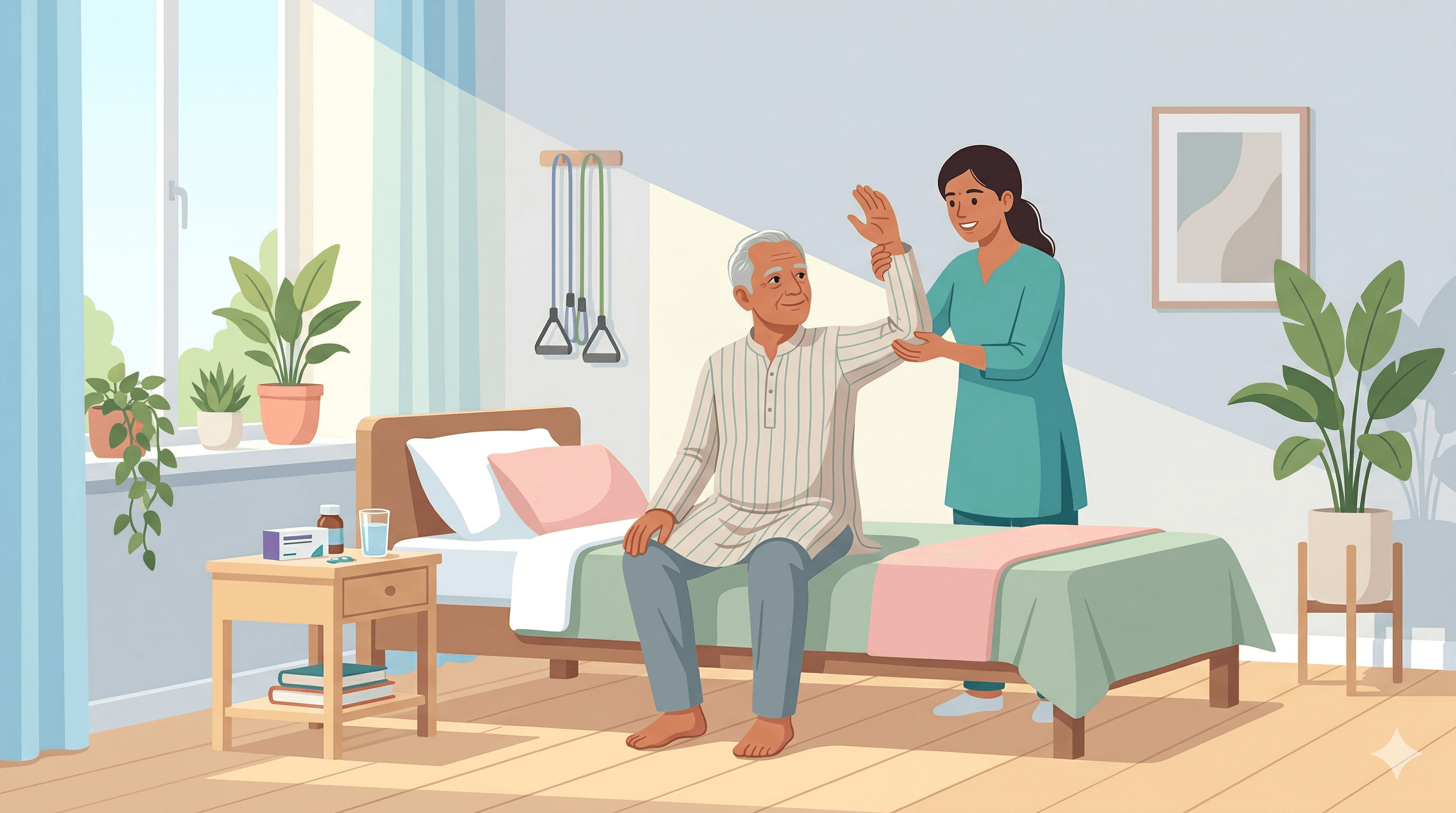
The hospital discharge papers feel heavy in your hands. Your loved one survived a stroke, but now you're facing a question no one prepared you for: what happens next? The hospital was the emergency room, but home is where the real healing marathon begins. This is a journey thousands of families in India begin every day, often feeling unprepared and alone.
The first 90 days after a stroke are not just a recovery period; they are a critical window of opportunity. This is when the brain's ability to rewire itself is at its peak, setting the stage for long-term independence. We'll cover the roles of professional nursing services, a patient attendant at home, and how to create an environment that fosters true healing.
Understanding the critical 90-day window for stroke recovery
The first three months post-stroke are the most intensive period for neurological healing. During this time, the brain's natural repair mechanisms are highly active and responsive to rehabilitation. Providing structured patient care and consistent therapy in this window can dramatically influence whether a person regains independence or faces lasting disability.
Neuroplasticity and the window of opportunity
Your brain has a remarkable ability called neuroplasticity, which allows it to form new connections and reorganize pathways around damaged areas. Think of it as a city rebuilding its road network after an earthquake. The first few months are when construction is fastest and new routes are established.
This biological urgency peaks in the first three months. The brain is ready to learn, but it needs the right teachers: physiotherapists, occupational therapists, and consistent daily support. This heightened plasticity gradually diminishes, which is why early, intensive rehabilitation makes such a measurable difference. Every assisted movement and speech exercise during these 90 days helps the brain find new ways to perform old tasks.
What to expect: acute, sub-acute, and early long-term phases
Recovery happens in phases, each with unique challenges and milestones. Understanding this timeline helps families set realistic expectations and recognize progress, even when it feels slow. Recovery is not a straight line; good days and bad days are a normal part of the process.
Phase | Timeline | Key Focus | Primary Care Needs |
|---|---|---|---|
Acute | Days 1-14 | Medical stability, preventing complications | Skilled nursing services, 24 hrs caretaker |
Sub-Acute | Weeks 3-8 | Intensive rehabilitation, rapid gains | Physiotherapy, occupational therapy, patient attendant at home |
Early Long-Term | Weeks 9-12 | Consolidating gains, building endurance | Continued therapy, adaptive equipment, patient care taker support |
The initial weeks are medically fragile, focusing on stability and preventing complications. The sub-acute phase is often when families see the most dramatic gains in movement and speech. The final month of this window is about building endurance and integrating new skills into daily life.
Essential care at home: nursing, attendant, and medical support
Bringing a stroke patient home requires a coordinated team, with each professional playing a distinct role. Understanding the difference between medical nursing services and daily attendant care helps you build the right support structure for your loved one's needs.
The role of skilled nursing services in post-stroke care
Skilled nursing services provide the medical expertise needed to manage complex health issues at home. A registered nurse monitors vital signs, administers medications on a precise schedule, manages feeding tubes or catheters, and prevents complications like pressure sores or infections. They are trained to recognize early warning signs of a secondary stroke or other medical emergencies, providing critical intervention when seconds count. This level of care is essential for patients with complex needs, ensuring their medical safety and providing peace of mind for the family. For more details, see this guide on home nursing for chronic illness management.
Patient attendant at home: daily support and comfort
A patient attendant at home provides the hands-on, compassionate assistance that preserves dignity and quality of life. While nurses handle medical tasks, attendants focus on Activities of Daily Living (ADLs) like bathing, dressing, grooming, toileting, and mobility support. An experienced attendant knows how to safely assist with transfers, make bathing comfortable, and provide feeding support for those with swallowing difficulties. Perhaps most importantly, they offer companionship, reducing the isolation and frustration many stroke survivors feel. This support frees family members to focus on emotional connection rather than the exhausting physical tasks of caregiving. This is a key part of any guide for caring for a bedridden patient.
Ensuring 24-hour patient care and safety
Many stroke survivors require continuous supervision due to high fall risk, cognitive impairments, or medical instability. A 24 hrs caretaker provides this round-the-clock vigilance, preventing accidents and responding immediately to emergencies. They ensure a structured daily routine is followed, from medication timing to therapy exercises, which is therapeutic in itself. For families, knowing a trained professional is always present provides invaluable peace of mind, especially overnight. This continuous oversight is a cornerstone of comprehensive patient care, ensuring your loved one is never alone or at risk.
Rehabilitation therapies: rebuilding strength and independence
Rehabilitation is the engine of stroke recovery. It is the active process of retraining the brain and body to regain lost functions. The first 90 days demand intensive, multidisciplinary therapy delivered consistently in the comfort of the patient's home.
Home physiotherapy for stroke recovery
Physiotherapy aims to restore strength, balance, coordination, and mobility. A physiotherapist creates a personalized program that evolves as the patient progresses, starting with passive movements to prevent joint stiffness and moving toward active exercises that build strength. Balance and coordination training are also critical for preventing falls. The benefits of home physiotherapy for stroke recovery include reduced travel stress and the ability to integrate exercises into the patient's daily routine, making therapy more functional and effective.
Occupational and speech therapy: regaining daily functions
Occupational therapy (OT) focuses on relearning the practical skills of daily life, such as eating, dressing, and writing. An OT teaches new techniques and recommends adaptive equipment to help patients regain independence. Speech and language therapy (SLT) addresses communication difficulties (aphasia) and swallowing problems (dysphagia). Aphasia therapy helps rebuild language skills, while dysphagia management is critical for preventing malnutrition and life-threatening aspiration pneumonia. Together, these therapies empower patients to participate more fully in their lives.
Psychological support and mental well-being
The emotional landscape of stroke recovery is often as challenging as the physical one. Depression, anxiety, and frustration are common among survivors and can hinder progress. Recognizing the signs and seeking professional help is essential. Psychological counseling provides a safe space to process these feelings and develop coping strategies. Family and caregiver support is just as important. Listening with empathy, celebrating small victories, and seeking support for your own well-being are crucial parts of the healing journey for everyone involved.
Creating a safe and supportive home environment
A safe and well-adapted home prevents injuries, promotes independence, and reduces the daily stress of recovery. Simple changes can make a significant difference in a stroke survivor's safety and confidence.
Fall prevention and home modifications
Falls are a major risk for stroke survivors due to weakness, poor balance, and impaired coordination. A few key modifications can drastically reduce this risk. Start by removing tripping hazards like loose rugs and clutter. Ensure all areas are well-lit, especially the path to the bathroom. Installing grab bars in the bathroom, using a raised toilet seat, and placing non-slip mats in the shower are essential. A patient care taker plays a vital role in supervising movement and assisting with transfers to prevent falls.
Medical equipment rentals for home recovery
Specialized equipment is often necessary to support recovery and ensure safety. This may include a hospital bed for proper positioning, a wheelchair for mobility, a bedside commode, or an oxygen concentrator. Renting this equipment is a cost-effective and convenient solution. It allows you to access high-quality devices without a large upfront investment and have them removed when they are no longer needed. Professional services can help you identify, deliver, and set up the right medical equipment rentals for home care.
Nutrition, hydration, and medication management
Proper nutrition and hydration are fundamental to healing. A balanced diet provides the energy and nutrients the brain needs to repair itself. For patients with dysphagia, food may need to be modified to a softer or pureed texture to ensure safe swallowing. Equally important is precise medication management. Stroke patients often take multiple medications to prevent a second stroke and manage conditions like high blood pressure. A skilled nurse or a diligent patient attendant at home can ensure this critical regimen is followed perfectly.
Navigating challenges and ensuring continuous progress
The recovery journey is filled with ups and downs. Knowing how to track progress, spot warning signs, and avoid common pitfalls will help you stay on course and provide the best possible support.
How do you monitor progress and recognize warning signs?
Tracking progress helps maintain motivation and shows that the hard work is paying off. Use a simple notebook to log small improvements, like being able to hold a cup for a few seconds longer or taking an extra step. However, it's just as important to recognize warning signs. Be alert for signs of infection (fever, redness), deep vein thrombosis (swelling or pain in one leg), or depression. Most critically, know the F.A.S.T. signs of another stroke (Face drooping, Arm weakness, Speech difficulty, Time to call for help) and contact a doctor immediately if you see them. For more information, visit the American Stroke Association.
How can you prevent a second stroke?
Many people believe the danger is over after the first stroke, but preventing a recurrence is a lifelong commitment. The first 90 days are crucial for establishing healthy habits. This involves managing key risk factors: controlling high blood pressure, managing diabetes and cholesterol, quitting smoking, eating a heart-healthy diet, and engaging in regular, doctor-approved physical activity. Adhering to prescribed medications and attending all follow-up appointments are non-negotiable. You can find more resources on heart health at the American Heart Association.
What are common mistakes families make in home stroke care?
Coming from a place of love, families often make a few common mistakes. The biggest is trying to do everything themselves, leading to caregiver burnout. Others include underestimating the need for continuous rehabilitation after the initial burst of progress, neglecting the patient's emotional needs, or failing to adequately adapt the home for safety. Acknowledging that you need help and seeking professional nursing services or an attendant for home care is a sign of strength, not weakness.
Why choose the right partner for comprehensive home care?
Choosing a home care provider is one of the most important decisions you will make. The right partner offers more than just a service; they provide expertise, reliability, and peace of mind during a stressful time.
Why professional home healthcare makes a difference
Professional home healthcare ensures your loved one receives expert, structured care that is proven to improve outcomes and reduce hospital readmissions. Unlike informal help, a professional agency provides vetted, trained, and supervised staff. They create a personalized care plan, handle all scheduling and payroll, and offer replacement guarantees if a caregiver is not the right fit. This structure allows you to focus on your loved one, not on logistics. It's a clear advantage when comparing professional home care versus hospital stays.
Heka Health's approach to trusted patient care
At Heka Health, we believe care should feel like family. Our approach is built on 'Heartfelt Trust' and 'Expert Hands.' We provide verified, skilled professionals who are chosen for both their capability and their kindness. With our 'Fast Hiring' promise, we can match you with a trained caregiver in as little as 4 hours, and our 'Replacement Guarantee' ensures seamless care. We offer 24/7 support because we know that needs don't follow a 9-to-5 schedule. We handle the complexities so you can focus on healing.
Conclusion: Your partner in healing and hope
The first 90 days of stroke recovery are a challenging but hopeful journey. It is a time when the right combination of skilled medical care, dedicated rehabilitation, and a safe home environment can lead to remarkable progress. You don't have to navigate this path alone. With a structured plan and professional support, you can create a foundation for the best possible long-term outcome.
Recovery is a marathon, not a sprint. Be patient with your loved one and with yourself. Contact Heka Health today to discuss how our expert nursing services and compassionate patient attendant at home can support your family's healing journey.
Frequently asked questions about stroke recovery at home
How soon after a stroke can a patient return home?
This depends on the stroke's severity and the patient's medical stability. Once a patient is stable and initial rehabilitation has begun, home care can be considered, often within days or weeks. A doctor's assessment is crucial for making this decision, sometimes involving a transition like moving from an ICU to home care.
What is the difference between a nurse and a patient attendant at home?
A nurse provides skilled medical care like medication management, wound care, and vital sign monitoring. A patient attendant at home assists with non-medical daily activities such as bathing, feeding, mobility, and companionship. Both are vital for comprehensive patient care, and you can learn more about nurses vs. attendants here.
Can home care truly provide effective rehabilitation?
Yes. With professional home physiotherapy and other therapies, home care can be highly effective. The familiar environment often increases comfort and consistency, which are crucial for recovery, especially during the critical 90-day window.
How can I ensure the safety of my loved one with a 24 hrs caretaker?
Reputable providers like Heka Health conduct rigorous background checks, verify qualifications, and offer replacement guarantees. Clear communication, a well-defined care plan, and regular check-ins are also essential for ensuring safety and quality 24 hrs caretaker services.
What if my loved one's condition changes or worsens at home?
Professional home care services include monitoring for changes and have protocols for escalation. Heka Health offers 24/7 dedicated health support, ensuring you have immediate assistance and guidance if a patient's condition requires urgent medical attention.
Your well-being
is our priority.
Together, let's navigate every step
with care and compassion.

Your well-being
is our priority.
Together, let's navigate every step
with care and compassion.
Your well-being
is our priority.
Together, let's navigate every step
with care and compassion.