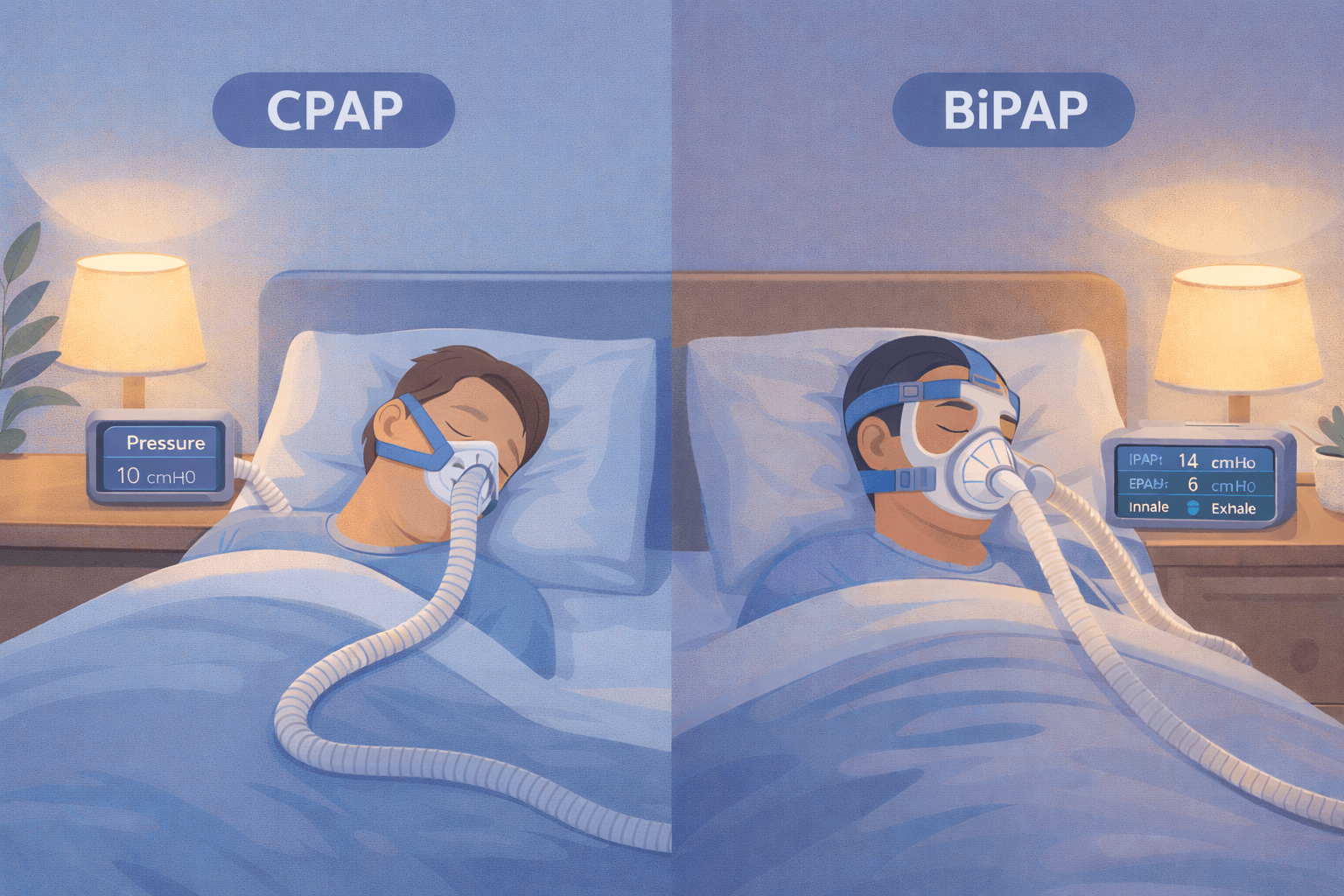
Introduction: navigating the world of sleep apnea and breathing support
Waking up exhausted after a full night's sleep isn't just frustrating, it's a red flag. For millions, this fatigue is a symptom of sleep apnea, a serious condition that often leads to a confusing crossroads: CPAP or BiPAP therapy. Choosing the right machine can feel overwhelming, but it's a decision that directly impacts your health and quality of life.
This guide is here to clear up the confusion. We'll break down the differences between CPAP and BiPAP, explain who benefits from each, and show you how to access these life-changing devices. Understanding your options is the first step toward proactive health management and a healthier future. Getting the right therapy isn't just about silencing snores, it's about protecting your long-term health.
Understanding sleep apnea and the critical need for respiratory support
Sleep apnea is a disorder where breathing repeatedly stops and starts during sleep, depriving your body of oxygen. The most common form, Obstructive Sleep Apnea (OSA), occurs when throat muscles relax and block the airway. Central Sleep Apnea (CSA) is less common and happens when the brain doesn't send the right signals to the breathing muscles. Both types disrupt sleep and can lead to serious health issues if left untreated.
What is sleep apnea and why does it matter for your health?
During a sleep apnea event, your airway closes, and your blood oxygen levels drop. Your brain senses this danger and briefly wakes you to restart breathing, a cycle that can repeat hundreds of times a night. You likely won't remember these awakenings, but their effect is significant.
This constant disruption prevents you from reaching deep, restorative sleep stages. The long-term consequences are severe. Research shows that untreated sleep apnea dramatically increases your risk of high blood pressure, heart attack, stroke, and type 2 diabetes. It also contributes to chronic daytime fatigue, poor concentration, and mood swings. Treating sleep apnea is crucial for protecting your overall health.
The fundamental role of positive airway pressure therapy
Positive airway pressure (PAP) therapy is the gold standard for treating sleep apnea. It works by delivering a gentle stream of pressurized air through a mask, creating a pneumatic splint that keeps your airway open while you sleep. This simple, mechanical solution prevents the airway collapse that causes apnea, allowing for continuous breathing and uninterrupted rest.
The therapy is non-invasive and highly effective, with most users experiencing immediate relief from symptoms. Just as chronic illnesses require ongoing, personalized management, finding the right type and pressure setting for your PAP therapy is key to successful treatment.
CPAP therapy: the foundational approach to restful sleep
Continuous Positive Airway Pressure (CPAP) is the most common treatment for sleep apnea. A CPAP machine delivers a single, constant level of air pressure all night long, both when you inhale and exhale. This steady airflow effectively prevents the airway from collapsing, making it an excellent solution for most cases of obstructive sleep apnea. Its simplicity and proven effectiveness make it the first choice for doctors and patients alike.
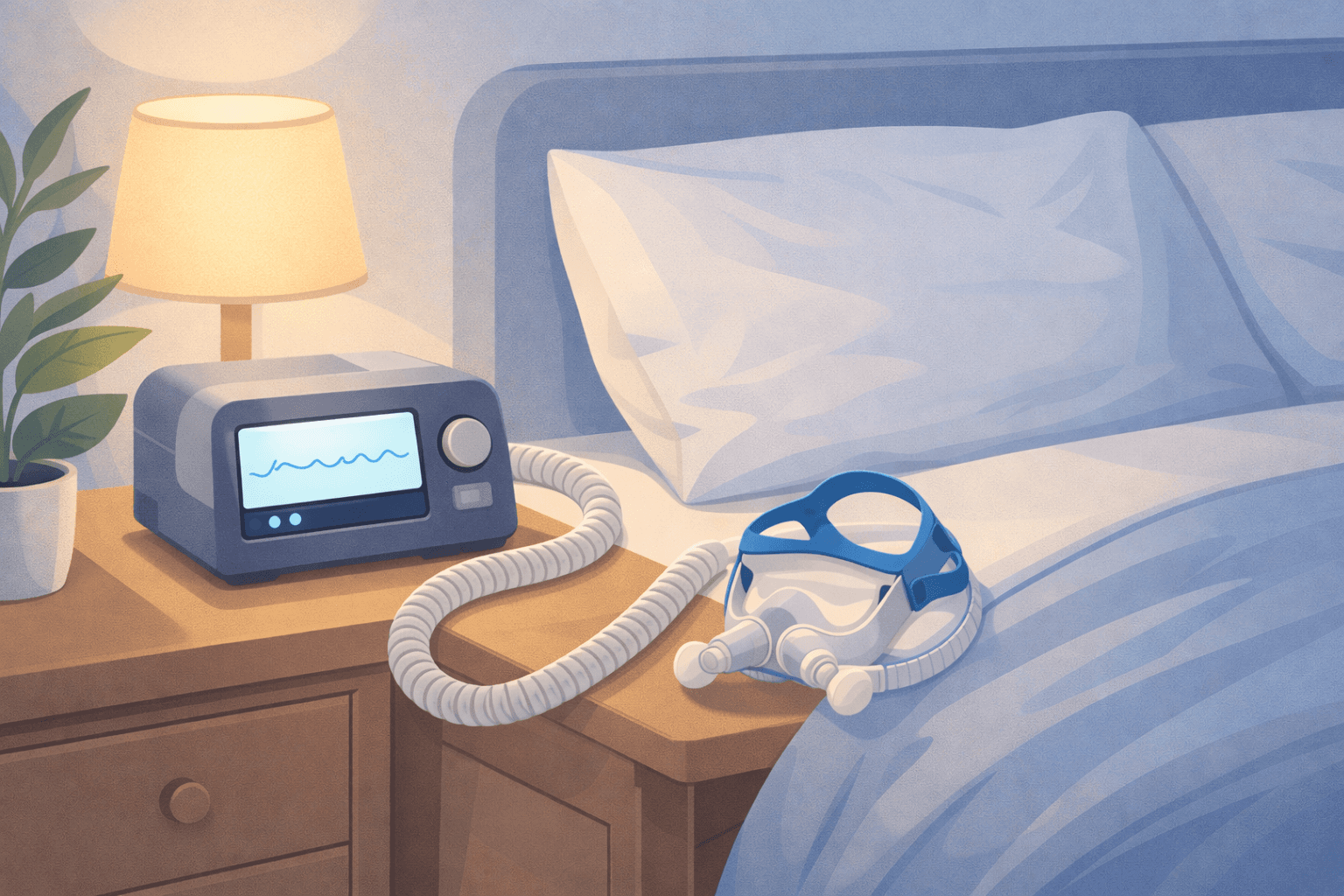
How CPAP machines deliver steady pressure for open airways
A CPAP machine uses a small motor to draw in room air, pressurize it to a specific level prescribed by your doctor, and deliver it through a hose to a mask. The key is consistency, the pressure remains the same throughout the night.
The mask is a critical component, and finding the right fit is essential.
Nasal masks: Cover the nose and are great for people who breathe through their nose.
Full-face masks: Cover both the nose and mouth, ideal for mouth breathers.
Nasal pillow masks: Use small cushions that seal at the nostrils, offering a minimal-contact option.
Most modern machines also include a "ramp" feature, which starts the pressure low and gradually increases it, helping you fall asleep more comfortably.
Who benefits most from CPAP therapy?
CPAP therapy is the go-to treatment for individuals with mild to severe obstructive sleep apnea (OSA). If your sleep study reveals that your breathing pauses are caused by a physical blockage in your airway, CPAP is likely the most effective solution. It's particularly well-suited for patients who can comfortably exhale against the same pressure they need for inhalation.
Successful CPAP users report life-changing benefits, including:
Elimination of snoring and apnea events.
Increased energy and alertness during the day.
Improved mood and cognitive function.
Reduced risk of long-term cardiovascular problems.
For most people with straightforward OSA, CPAP provides everything needed for a safe and restful night's sleep.
BiPAP therapy: advanced solutions for complex breathing needs
Bi-level Positive Airway Pressure (BiPAP) therapy offers a more customized approach to breathing support. Unlike CPAP's single pressure, a BiPAP machine delivers two different pressures: a higher pressure when you inhale (IPAP) and a lower pressure when you exhale (EPAP). This dual-setting system makes breathing out easier and feels more natural, which is crucial for patients with specific respiratory conditions or those who find CPAP uncomfortable.
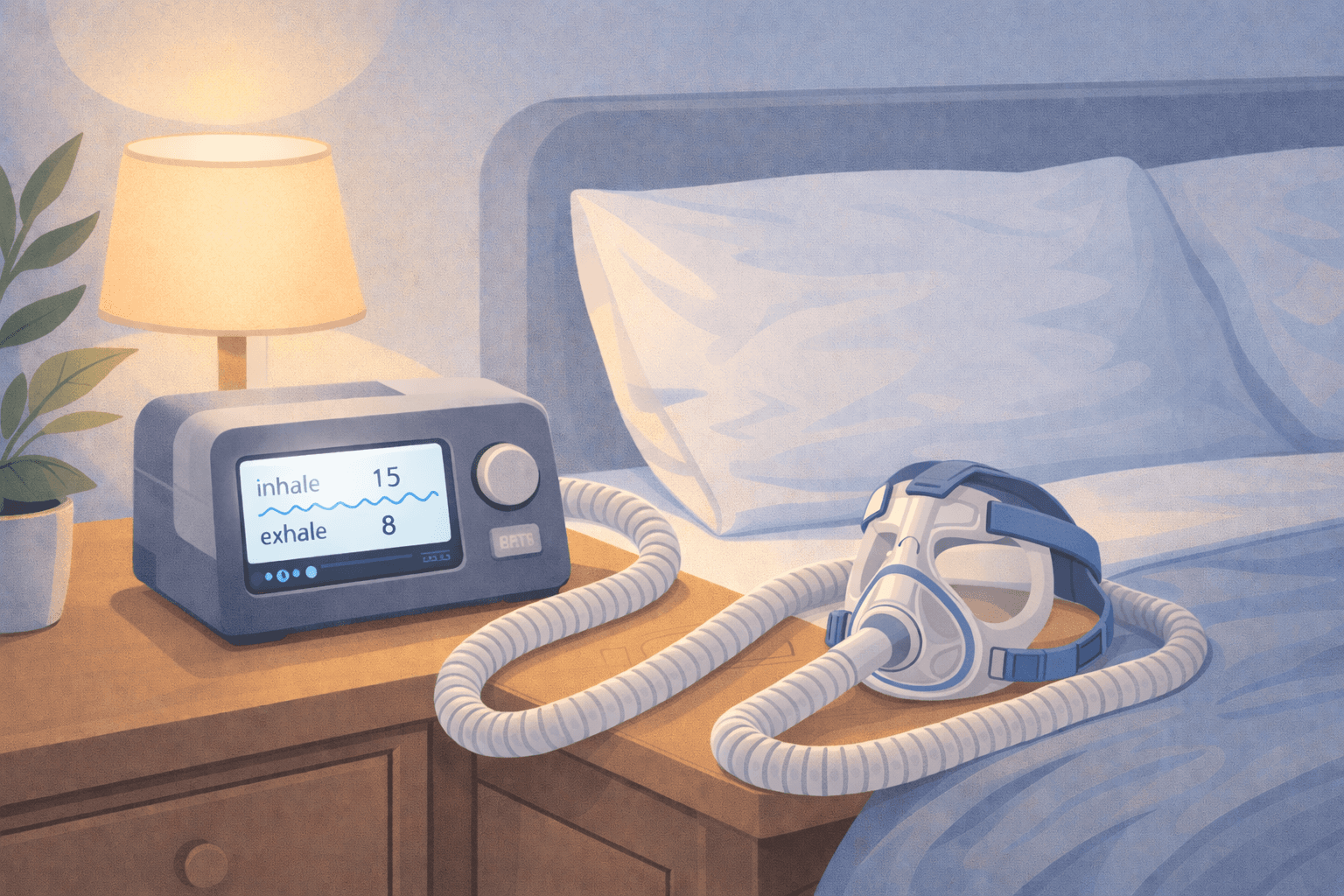
The dual-pressure advantage of BiPAP machines
The primary benefit of BiPAP is comfort. The lower expiratory pressure (EPAP) reduces the resistance you feel when breathing out, which can be a major hurdle for some CPAP users, especially at higher pressure settings. This makes the breathing cycle feel more natural and less forced.
This dual-pressure system also allows for more tailored therapy. Doctors can set both the inhalation and exhalation pressures independently to meet a patient's specific clinical needs. This level of control is essential for managing more complex respiratory disorders where simply splinting the airway open isn't enough.
When is BiPAP the preferred choice for respiratory conditions?
BiPAP is typically prescribed when CPAP isn't effective or tolerated, or for certain medical conditions. These include:
Central Sleep Apnea (CSA): Where the brain fails to signal the muscles to breathe, BiPAP machines with a backup rate can trigger a breath automatically.
COPD (Chronic Obstructive Pulmonary Disease): The lower exhalation pressure helps people with COPD clear carbon dioxide from their lungs more effectively.
Neuromuscular Disorders: Conditions like ALS or muscular dystrophy weaken breathing muscles, and BiPAP provides the extra support needed to move air.
High-Pressure Needs: Patients who require very high CPAP pressures often find it difficult to exhale. BiPAP makes exhalation more comfortable in these cases.
For these complex situations, BiPAP provides necessary respiratory support that goes beyond what CPAP can offer. This is why it's often complemented by services like at-home respiratory physiotherapy to improve lung function.
Optimizing comfort and settings for BiPAP users
Fine-tuning a BiPAP machine is key to maximizing its benefits. A sleep specialist plays a critical role in adjusting the IPAP and EPAP settings based on your specific breathing patterns and needs. Modern BiPAP devices also come with advanced features to enhance comfort.
The ramp function, similar to CPAP, allows the pressure to build gradually as you fall asleep. Integrated humidifiers prevent your mouth and nasal passages from drying out. Regular follow-ups with your doctor are essential to ensure the settings remain optimal, especially if your health condition changes over time.
Key differences in pressure delivery and therapeutic application
The core difference is simple: CPAP delivers one constant pressure, while BiPAP delivers two, a higher one for inhaling and a lower one for exhaling. This makes BiPAP a more advanced therapy designed for complex needs.
Feature | CPAP (Continuous Positive Airway Pressure) | BiPAP (Bi-level Positive Airway Pressure) |
|---|---|---|
Pressure Delivery | One single, continuous pressure level. | Two distinct pressure levels (higher on inhale, lower on exhale). |
Primary Use | Obstructive Sleep Apnea (OSA). | Central Sleep Apnea, COPD, Neuromuscular disorders, CPAP intolerance. |
Breathing Feel | Constant pressure can make exhaling feel difficult for some. | Exhaling is easier due to lower pressure, feels more natural. |
Complexity | Simpler machine and settings. | More complex, with advanced settings and backup breath rates. |
Cost | Generally less expensive to rent or buy. | More expensive due to advanced technology. |
Factors influencing your doctor's recommendation
Your doctor's choice between CPAP and BiPAP will be based on several factors identified during your evaluation. The results of your sleep study are paramount, as they reveal the type (obstructive vs. central) and severity of your apnea.
Your overall health profile also plays a huge role. If you have co-existing conditions like COPD, congestive heart failure, or a neuromuscular disorder, your doctor will likely lean toward BiPAP. Finally, your personal comfort and ability to tolerate the therapy are crucial. If you've tried CPAP and struggled to adapt, BiPAP may be recommended as a more comfortable alternative.
The common mistake of self-diagnosis: why expert consultation is vital
Never attempt to choose a CPAP or BiPAP machine on your own. These are prescribed medical devices, and using the wrong one can be ineffective or even harmful. An incorrect pressure setting can fail to treat your apnea or, in some cases, worsen certain conditions.
A sleep specialist is trained to interpret your test results and prescribe the exact therapy you need. They will determine the correct machine type and pressure settings to ensure your treatment is both safe and effective. You can get tested with a home sleep apnea test to start the process, but the final prescription must come from a qualified professional.
Accessing your therapy: rental options and Heka Health's comprehensive support
Once you have a prescription, the next step is getting your machine. For many, renting is a smart and flexible option. Renting allows you to try a device without a large upfront investment and ensures you have access to professional support and maintenance. At Heka Health, we simplify this process to get you started on your therapy quickly and confidently.
Why consider renting a CPAP or BiPAP machine?
Renting a device offers significant advantages. If you need a cpap machine on rent or a bipap machine on rent, you benefit from lower initial costs, making therapy more accessible. It's also an excellent way to try out a specific model before committing to a purchase.
Renting is ideal for short-term needs, such as recovering from surgery or for travel. Furthermore, rental services from a trusted provider like Heka Health often include maintenance and support, so you never have to worry about your equipment functioning properly.
Heka Health's seamless rental and dedicated support process
We believe accessing your therapy should be stress-free. Our process is designed for speed and peace of mind. We offer a fast hiring process, ensuring you can start your therapy within hours of your request. All our equipment is rigorously verified for quality and hygiene, so you can trust you're receiving a top-tier, well-maintained machine.
Most importantly, our support doesn't end when the machine is delivered. We provide 24/7 dedicated health support to answer your questions and troubleshoot any issues. Our team of experts is here to guide you, ensuring you feel comfortable and confident with your therapy from day one. To learn more, contact our care team today.
Beyond the machine: holistic home healthcare solutions
Effective respiratory therapy is often part of a larger care plan. Heka Health provides a full spectrum of home healthcare services that can complement your CPAP or BiPAP treatment. Our attendant care or skilled nurse care services can provide comprehensive monitoring, medication management, and daily support, all within the comfort of your home. This integrated approach ensures all your health needs are met, promoting a faster and more comfortable recovery.
Frequently asked questions
Do I need a prescription to rent a CPAP or BiPAP machine?
Yes, both CPAP and BiPAP machines are considered Class II medical devices and require a valid prescription from a licensed physician to rent or purchase. This ensures you receive the correct type of machine and pressure settings for your specific medical condition.
How often should I clean my CPAP/BiPAP machine and accessories?
Daily cleaning is recommended for your mask cushion and water chamber. Use mild soap and warm water. The tubing and headgear should be cleaned weekly. This routine prevents the buildup of bacteria and ensures your therapy remains effective and hygienic.
Can I travel with my CPAP or BiPAP machine?
Absolutely. Modern CPAP and BiPAP machines are portable and FAA-approved for use on airplanes. Most come with a travel case. It's a good idea to carry a copy of your prescription and notify the airline in advance. Battery packs are also available for use during flights or camping.
What is the difference between CPAP and APAP (Auto-CPAP)?
CPAP delivers one fixed pressure all night. APAP, or Auto-CPAP, is a type of CPAP that automatically adjusts the pressure throughout the night based on your breathing needs. It provides more pressure when it detects an apnea or snoring and less when your breathing is stable.
How long does it typically take to adjust to CPAP/BiPAP therapy?
The adjustment period varies for everyone. Some people feel comfortable within a few nights, while others may take several weeks. Consistency is key. Using the machine every night, even for short periods at first, helps your body adapt more quickly. Most people report significant benefits within the first month.
Your well-being
is our priority.
Together, let's navigate every step
with care and compassion.

Your well-being
is our priority.
Together, let's navigate every step
with care and compassion.
Your well-being
is our priority.
Together, let's navigate every step
with care and compassion.