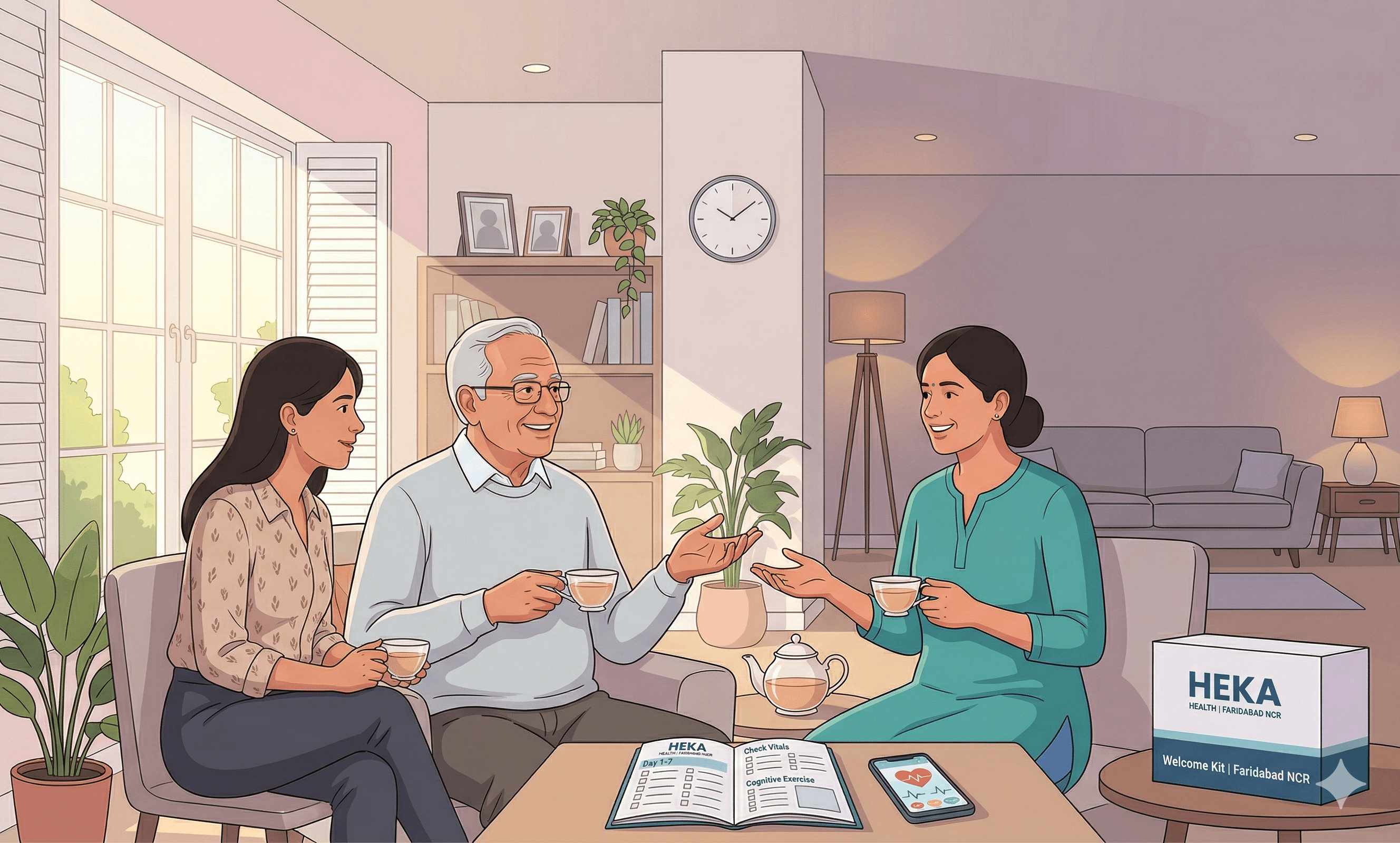
When we think about caring for an ageing parent or grandparent, it's easy to focus on the physical: medication schedules, mobility aids, doctor visits. But for millions of elderly individuals across India, the greater struggle is often invisible. Loneliness, anxiety, and a quiet sense of losing purpose weigh far heavier than many families realise.
The good news is that professional home healthcare services do far more than manage physical health. When delivered with compassion and consistency, home care for the elderly becomes one of the most powerful tools for protecting their mental well-being in the place they love most.
Why does mental health matter so much in old age?
Ageing brings unavoidable changes: retirement, reduced mobility, the loss of friends and loved ones. Each of these chips away at a senior's sense of identity and belonging. A study by the World Health Organization found that 1 in 4 older adults experience social isolation, which significantly increases the risk of depression and cognitive decline.
Yet mental health in the elderly remains vastly under-discussed in Indian households. Families often assume a physically stable elder is a happy one. In reality, an elder sitting quietly at home for hours on end may be struggling deeply, and never say a word about it.
This is where structured, in-home care makes a life-changing difference.
How does companionship care address emotional isolation?
One of the most underestimated aspects of companionship care for elderly individuals is how profoundly human connection affects the brain. Regular, meaningful interaction, whether it's a conversation over morning tea, a shared walk in the garden, or simply having someone present in the home, lowers cortisol levels, reduces anxiety, and gives seniors something to look forward to each day.
Professional caregivers trained in elderly care at home are not just task-completers. They build genuine relationships over time. They remember how your mother takes her chai, which cricket team your father follows, and what topics make them light up. This consistency and familiarity is itself a form of therapy.
Benefits of structured companionship in home care:
Reduced feelings of loneliness: Daily interaction breaks the cycle of isolation that fuels depression in seniors.
Improved cognitive engagement: Conversation, light games, and mentally stimulating activities help maintain memory and alertness.
Sense of routine and purpose: Having someone arrive each day gives structure to otherwise long, unoccupied hours.
Emotional expression: Many elders find it easier to open up to a caregiver than to family members, reducing suppressed stress.
What role does staying at home play in emotional stability?
There is a reason most elderly individuals, when asked, say they want to remain at home. It isn't stubbornness; it is deeply tied to identity. Familiar surroundings, cherished belongings, neighbourhood sounds, and lifelong routines all serve as anchors for an older person's sense of self.
Moving to an institutional setting, even a well-managed one, can trigger what psychologists call "relocation stress," a period of anxiety, confusion, and grief that some elderly never fully recover from.
Home healthcare services protect against this. By bringing professional care into the elder's existing environment, families ensure that medical and emotional support is delivered without the trauma of displacement. The elder remains sovereign in their own home, which is in itself a powerful protector of dignity and mental health.
How do professional caregivers support emotional well-being day to day?
Trained caregivers working in elderly care at home settings observe and respond to mental health cues that family members stretched thin by work and other responsibilities may miss entirely.
Day-to-day emotional support from professional caregivers includes:
Mood monitoring: Noting changes in appetite, sleep, withdrawal, or irritability and communicating these to families promptly.
Encouragement of light activity: Gentle walks, stretching, or simple hobbies like reading keep the mind engaged and the body from stagnating.
Assistance with video calls: Helping elders connect digitally with family members who live away reduces the acute loneliness of physical distance.
Reassurance during anxiety episodes: A calm, familiar presence during moments of confusion or health-related fear is deeply steadying.
Facilitating social engagement: Accompanying elders to the temple, local parks, or community gatherings keeps them connected to the world around them.
This is the quiet, consistent work that professional home care does, and that no prescription can fully replace.
How does physical care translate into mental relief?
There is a direct, proven relationship between physical comfort and emotional well-being in older adults. An elder in chronic pain sleeps poorly, becomes irritable, withdraws from conversation, and loses appetite. An elder who cannot bathe independently feels humiliated and defeated. These are not small inconveniences; they erode mental health steadily.
When home healthcare services address the physical with skill and dignity, managing pain, assisting with personal hygiene, and ensuring proper nutrition, the psychological burden lifts significantly. Seniors feel clean, comfortable, and cared for. That security translates directly into lower anxiety and improved mood.
Physical care provided | Mental health impact |
Pain and medication management | Reduces irritability, improves sleep quality |
Assistance with personal hygiene | Restores dignity and self-esteem |
Nutritious meal support | Stabilises energy levels and mood |
Mobility and physiotherapy support | Builds confidence and reduces fear of falls |
Night-time supervision | Alleviates anxiety and helps regulate sleep |
What should families look for in a mental well-being-focused care plan?
Not all care plans are built equal. Families seeking genuine emotional support for seniors should look for providers who treat mental health as a first-class priority, not an afterthought.
Questions worth asking your home care provider:
Are caregivers trained in elder psychology and communication?
Knowing how to speak to a person with early dementia, or how to handle a grief episode, requires specific training.
Is there a personalised care plan?
The elder's hobbies, personality, preferences, and emotional triggers should inform how care is delivered, not just their medical history.
Is family kept in the loop?
Regular updates from caregivers help families respond quickly to emotional changes before they become crises.
Is the continuity of a caregiver ensured?
Trust takes time to build. Rotating caregivers disrupts the bond that makes companionship care effective.
Choosing the right support makes all the difference
Care is not just about keeping someone safe; it is about making sure they feel seen, valued, and at home in their own life. For elderly individuals, that distinction matters enormously. A senior who receives attentive, personalised care does not just live longer, they live better. They wake up with something to look forward to. They feel less like a burden and more like themselves.
At Heka Health, our elderly care programmes are built around this understanding. Every care plan goes beyond physical support; it reflects who your loved one is, what comforts them, and the kind of everyday care that genuinely lifts their mood.
If your elderly parent is spending long hours alone, showing signs of withdrawal, or simply needs a steady, caring presence, we are here.
Reach out to Heka Health today, and let us take that first step together.
Frequently asked questions about elderly mental well-being & home care
How does home healthcare improve mental health in the elderly?
Home healthcare provides companionship, routine, and emotional support, reducing loneliness and improving overall well-being.
Why is companionship important for elderly people?
Regular interaction helps reduce isolation, improves mood, and keeps the mind active through conversation and engagement.
Can staying at home improve emotional stability in seniors?
Yes, familiar surroundings provide comfort, reduce anxiety, and help seniors maintain a sense of identity and independence.
What signs show an elderly person may be struggling mentally?
Common signs include withdrawal, loss of interest, mood changes, sleep issues, and reduced communication.
How can caregivers support emotional well-being daily?
Caregivers provide companionship, encourage activities, monitor mood changes, and help seniors stay socially connected.
Visit Now India's best healthcare services at home
Your well-being
is our priority.
Together, let's navigate every step
with care and compassion.

Your well-being
is our priority.
Together, let's navigate every step
with care and compassion.
Your well-being
is our priority.
Together, let's navigate every step
with care and compassion.