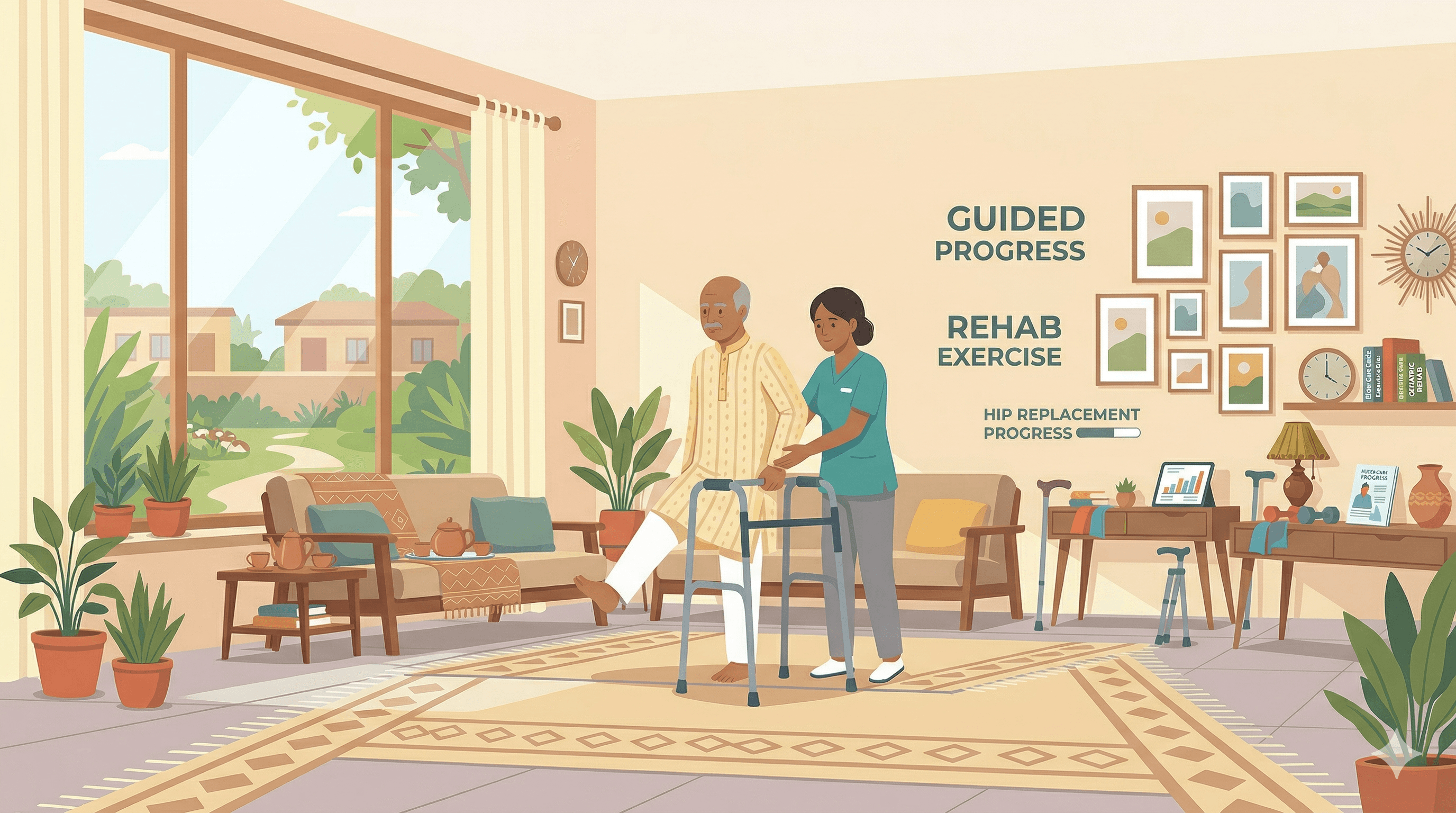
Hip replacement surgery transforms lives by eliminating years of chronic pain and restoring mobility. According to research, within 3 to 6 weeks after hip replacement, patients can resume normal activities without pain. However, achieving this outcome requires understanding what happens during each recovery phase and following structured rehabilitation at home.
The success of hip surgery physiotherapy home programmes determines whether patients achieve optimal function or settle for limited recovery.
This week-by-week guide helps families prepare for the journey ahead, set realistic expectations, and maximise outcomes through proper rehabilitation.
Week 1-2: Hospital discharge and initial home adjustment
The first two weeks focus on basic safety, pain management, and gentle movement whilst the surgical site begins healing.
Immediate priorities:
Pain control: Taking prescribed medications on schedule prevents pain from escalating.
Wound care: Keeping incisions clean and dry, watching for signs of infection.
Basic mobility: Walking short distances with a walker, practising safe transfers.
Hip precautions: Avoiding bending beyond 90 degrees, crossing legs, or twisting movements.
Simple exercises: Ankle pumps, quadriceps sets, and gentle leg slides multiple times daily.
Professional physiotherapists at home services during this vulnerable period ensure exercises are performed correctly, hip precautions are followed, and warning signs aren't ignored. Many patients experience swelling, which typically peaks around days 3-5, and fatigue from the surgery itself.
Week 3-4: Building strength and increasing movement
By week three, focus shifts toward progressive strengthening whilst maintaining safety protocols.
Key rehabilitation goals:
Extended walking: Gradually increasing distance walked, still using a walker for stability.
Stair practice: Learning safe techniques for navigating stairs with support.
Strengthening exercises: Hip abductions, straight leg raises, heel slides with resistance.
Balance work: Standing exercises preparing for walker independence.
Self-care activities: Bathing, dressing, and grooming with adaptive equipment.
Research from PMC demonstrates that rehabilitation following hip replacement is organized into distinct phases, with phase I focusing on joint protection, whilst phase II emphasizes strength recovery. Professional guidance ensures smooth progression between these phases without risking complications.
Week 5-6: Transitioning to increased independence
Weeks five and six mark significant milestones as patients transition from walker to cane and increase activity levels.
Progressive activities:
Cane usage: Graduating from walker to single-point cane for support.
Outdoor walking: Short walks outside on level surfaces, building endurance.
Advanced exercises: Mini squats, standing hip extensions, side-lying leg lifts.
Household activities: Light cooking, laundry, basic chores with precautions.
Driving preparation: Evaluating readiness to drive based on medication use and hip control.
According to Johns Hopkins Medicine research, incisions typically take about six weeks to fully heal, marking an important milestone when infection risk decreases, and activity restrictions begin easing. Professional hip replacement recovery at home support helps patients navigate this transition safely.
Week 7-8: Consolidating gains and preparing for long-term recovery
The final weeks of the initial recovery phase focus on solidifying improvements and establishing sustainable exercise routines.
Focus areas weeks 7-8:
Independent walking: Walking without assistive devices for most activities.
Endurance building: Longer walking sessions, stationary cycling.
Functional strength: Exercises mimicking daily activities like reaching, lifting, and squatting.
Balance refinement: Single-leg stands, dynamic balance activities.
Return to work planning: For desk jobs, many return around 4-6 weeks post-surgery.
What exercises should happen daily during recovery?
Regular daily exercise forms the foundation of successful hip replacement recovery at home. Professional physiotherapists prescribe specific programmes, but certain activities benefit most patients.
Essential daily exercises by phase:
Week | Exercise focus | Examples |
1-2 | Gentle motion, circulation | Ankle pumps, quad sets, heel slides, gentle leg raises |
3-4 | Strength building | Hip abductions, bridges, mini squats with support |
5-6 | Balance and endurance | Single-leg stands, step-ups, longer walks |
7-8 | Functional activities | Stairs without rail, squats, resistance band work |
Patients should perform exercises 2-3 times daily during the early weeks, gradually reducing frequency as strength improves. Quality matters more than quantity. Ten properly performed repetitions prove more beneficial than twenty sloppy ones.
How does professional home physiotherapy improve outcomes?
Whilst hospitals provide initial therapy, ongoing professional support at home offers distinct advantages during the crucial recovery period.
Benefits of home physiotherapy services:
Real-environment training: Practising movements on your actual stairs, furniture, and floor surfaces.
Personalised progression: Adjusting intensity based on daily response rather than generic protocols.
Safety monitoring: Catching compensatory movement patterns before they become habits.
Equipment recommendations: Advising on assistive devices, raised toilet seats, and grab bars.
Family education: Teaching proper assistance techniques, preventing injury to both patient and helper.
As we explored in home physiotherapy for stroke recovery, bringing professional rehabilitation directly to patients' homes produces superior outcomes compared to clinic-based programmes.
What complications should you watch for?
Most hip replacements progress smoothly, but certain warning signs demand immediate medical attention.
Emergency symptoms:
Sudden severe pain not relieved by medication.
Fever above 38°C with chills.
Increasing redness, warmth, or drainage from the incision.
Severe calf pain or swelling suggesting a blood clot.
The hip feels unstable or gives way during weight-bearing.
Shortness of breath or chest pain.
Less urgent but concerning issues include persistent pain limiting function, swelling not improving after two weeks, or inability to progress with exercises despite consistent effort. Professional nurse care at home helps identify these problems early before they become serious.
When can you return to normal activities?
Activity resumption depends on healing progress, but general timelines help patients plan realistically.
Typical activity timeline:
Driving: Left hip or automatic transmission 2-3 weeks; right hip 4-6 weeks.
Desk work: 2-3 weeks for sedentary jobs.
Light housework: 3-4 weeks with precautions.
Swimming: 6 weeks once the incision is fully healed.
Golf: 6-8 weeks for gentle swings.
Sexual activity: When comfortable, typically 4-6 weeks.
Air travel: 4-6 weeks with frequent walking during flights.
High-impact activities like running, jumping, or contact sports require surgeon approval, typically after 3-6 months with evidence of complete healing and adequate strength.
Creating a supportive home environment
The physical environment significantly impacts recovery safety and success.
Home modifications supporting recovery:
Remove loose rugs, electrical cords, and clutter creating trip hazards.
Install grab bars near the toilet and in the shower.
Use raised toilet seat reducing hip flexion beyond safe angles.
Place frequently used items at waist height, avoiding bending or reaching.
Ensure adequate lighting throughout the home, especially on the stairs.
Consider a shower chair for safe bathing during the early weeks.
Keep a reacher/grabber tool for picking up dropped items.
These simple modifications prevent falls whilst supporting independent function as strength rebuilds.
Managing expectations for long-term recovery
Whilst the 8-week timeline covers initial recovery, complete rehabilitation continues for several months.
Beyond 8 weeks:
Months 3-6: Continued strength gains, return to most normal activities, refined movement patterns.
6-12 months: Residual improvement possible, achieving maximum function for activity level.
Beyond 1 year: The new hip becomes natural, most patients forget which hip was replaced.
According to data from India's leading orthopaedic centres, hip replacement success rates exceed 95%, with modern implants lasting 15-20 years or more. Achieving these excellent outcomes requires consistent rehabilitation during critical early months.
Getting professional hip replacement recovery support
Hip replacement offers life-changing relief from chronic pain and disability. However, surgery is only the beginning. The rehabilitation that follows determines whether patients achieve excellent function or settle for adequate results.
Professional home service programmes provide the expertise, consistency, and safety monitoring that transform recovery from overwhelming challenges into manageable progression. Physiotherapists bring hospital-quality rehabilitation directly to your home, ensuring exercises are performed correctly, complications are caught early, and recovery stays on track.
The investment in professional guidance during these crucial eight weeks pays dividends in long-term function, independence, and quality of life. ‘
If you or a loved one is preparing for hip replacement or is currently recovering,contact us to discuss how professional physiotherapy at home can support your rehabilitation journey.
Frequently asked questions about hip replacement recovery at home
How long does it take to recover from hip replacement at home?
Most patients recover significantly within 6–8 weeks, but full recovery may take 3–6 months.
When can I walk normally after hip replacement surgery?
Patients usually start walking with support within a few days and can walk independently by 6–8 weeks.
Is physiotherapy necessary after hip replacement?
Yes, physiotherapy is essential to restore strength, mobility, and balance and prevent complications.
What activities should be avoided after hip replacement?
Avoid:
Bending beyond 90 degrees
Crossing legs
Twisting movements
High-impact activities
When should I consult a doctor during recovery?
Seek medical help if you notice:
Severe pain or swelling
Fever or infection signs
Difficulty walking
Sudden instability
Your well-being
is our priority.
Together, let's navigate every step
with care and compassion.

Your well-being
is our priority.
Together, let's navigate every step
with care and compassion.
Your well-being
is our priority.
Together, let's navigate every step
with care and compassion.